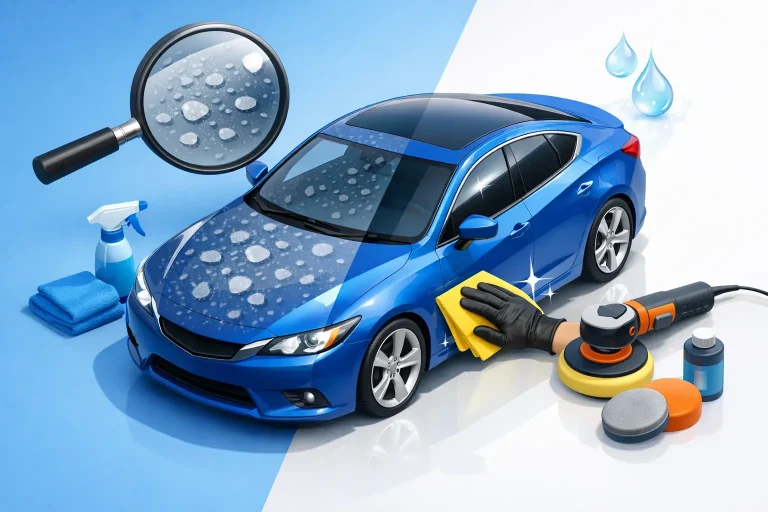
You wash the car, step back, and the paint still looks rough in the sun. Those ghost-like rings on the hood, glass, and trim are why water spot removal car questions come up so often. The frustrating part is that not all water spots are the same, and the wrong fix can waste time or add scratches.
If you want a clean answer, start here: some water spots sit on the surface and come off fairly easily, while others have already started etching into the finish. That difference matters. It changes whether a quick chemical treatment is enough or whether the vehicle needs machine polishing to truly restore clarity.
Why water spots show up in the first place
Water spots usually come from mineral-heavy water drying on the vehicle. As the water evaporates, it leaves behind calcium, magnesium, and other deposits. Sprinklers are a common culprit, but so are hard-water rinses, rain followed by heat, and even washing a car in direct sun.
In New England, this can be especially common when vehicles are exposed to changing weather, outdoor parking, and inconsistent wash habits. A car gets rinsed, left to air dry, and then sits in the sun. The result is a mineral deposit that starts as a cosmetic issue but can become a paint correction issue if it bakes in long enough.
The same thing can happen on glass, chrome, and plastic trim. Each surface responds differently, which is why one product that works on windows might not be the right choice for black trim or clear coat.
Water spot removal car methods depend on the type of damage
The biggest mistake people make is treating every spot like it is just sitting on top of the paint. Sometimes that is true. Fresh mineral deposits often respond well to a dedicated water spot remover, a mild acidic cleaner, or clay treatment. But once those minerals have had time to react with heat and the surface below, the stain may no longer be fully removable by chemicals alone.
That is when people say, “I tried everything and the spots are still there.” In many cases, the residue is gone, but the etching remains. At that point, the defect is part of the surface texture, not just contamination on top of it.
A quick test helps tell the difference. If the area feels rough and improves after decontamination, you may be dealing mostly with deposits. If it looks dull, cratered, or hazy even after cleaning, some level of polishing is usually the next step.
What works at home and what to avoid
For light cases, a careful at-home approach can work. Start with a proper wash using pH-balanced soap and clean wash media. Dry the vehicle completely rather than letting water sit and evaporate. If spots remain, use a product specifically designed for automotive water spots and follow the instructions closely.
This is where patience matters more than force. Aggressive scrubbing usually does not solve the problem. It often adds swirl marks, especially on darker paint. Household cleaners can also create new issues. Vinegar is often suggested online, and while mild acidity can help break down minerals, kitchen remedies are inconsistent and easy to misuse on sensitive finishes.
The same goes for abrasive pads or random compounds pulled from a garage shelf. If the surface is gloss black trim, soft clear coat, or coated paint, an overly aggressive approach can leave you with a bigger correction job than the original spotting.
A safer path is to work from least aggressive to more corrective. Wash first. Then test a dedicated remover on a small section. If needed, move to clay or a light polish, but only if you are confident in the process and tools.
When polishing is the real answer
If water spots have etched into the clear coat, polishing is often the only way to restore a uniform finish. This removes a microscopic amount of material to level the surface and reduce or eliminate the etched appearance. Done properly, it can dramatically improve gloss and clarity.
But this is also where experience matters. Polishing is not a one-size-fits-all process. Paint hardness varies by manufacturer. The right pad and polish combination for one vehicle may be too aggressive or not aggressive enough for another. Glass and trim require separate considerations, and heavily etched areas may need multiple test passes to see what is realistically correctable.
That is one reason professional detailing delivers better outcomes on spot-affected vehicles. A trained detailer is not guessing. They are evaluating the severity, the surface, and the safest path to improvement. In some cases, full removal is possible. In others, the right goal is significant improvement without taking unnecessary risk with paint thickness.
Why coatings are not a shortcut for existing spots
Some owners assume a ceramic coating will hide water spots or make them disappear. It will not. If defects are left in the paint before protection is applied, they are still there afterward. In fact, coating over unresolved spotting can lock in the problem visually and make the finish look less refined than it should.
Where coatings help is after correction. Once the paint has been properly cleaned and, if needed, polished, protection makes future maintenance easier. Water behavior improves, washing gets easier, and contaminants are less likely to bond as aggressively. That does not mean a coated vehicle is immune to spotting. It means you have more time and a better chance of preventing buildup when the car is maintained correctly.
For owners who care about long-term appearance, this is usually the smarter approach: correct first, then protect, then maintain on a schedule that matches how the vehicle is used and stored.
The surfaces people forget about
Paint gets the most attention, but glass often shows water spotting even more clearly. Side windows, windshields, and mirrors can collect mineral deposits that reduce clarity, especially in direct sun or rain. If the spotting is severe, it can affect visibility and make wiper performance feel worse than it actually is.
Trim is another trouble area. Textured plastic and piano black surfaces can hold deposits differently than painted panels. What works on paint may stain or haze trim if used carelessly. Wheels are also prone to spotting because they deal with heat, brake dust, and hard water all at once.
That is why complete water spot treatment is rarely just about one panel. A quality result looks consistent across the entire vehicle, not just on the hood and roof.
Prevention is easier than correction
The best water spot removal car strategy is preventing the next round. Drying the car after washing is one of the simplest habits that makes a real difference. Parking away from active sprinklers helps too. If a vehicle does get hit with hard water, rinsing and drying it quickly is far better than letting it bake on the surface for days.
Regular maintenance also lowers the odds of severe buildup. A protected, properly maintained vehicle is easier to clean and easier to inspect before minor spotting turns into etching. For busy owners, this is where professional maintenance detailing becomes more than a convenience. It protects the time and money already invested in the vehicle.
At SPS Auto Detailing, this is often the turning point for customers. They come in looking for a one-time fix, then realize the bigger value is having a reliable plan that keeps the vehicle from getting back to that condition.
When it makes sense to call a professional
If the spots have been there for more than a few weeks, if they cover multiple surfaces, or if you have already tried removers without success, professional evaluation is usually the better move. The same applies if the vehicle has dark paint, specialty finishes, or a premium coating that you do not want to compromise.
A reputable detailer should be able to explain what type of spotting they see, what level of correction is realistic, and whether the issue is removable contamination or actual etching. That transparency matters. Not every spot comes out 100 percent, and honest expectations are part of professional service.
Water spots can look minor until sunlight hits the paint and reveals every outline. The good news is that most cases can be improved, and many can be corrected very well with the right process. The sooner you address them, the easier the job usually is.
If your vehicle is showing spots after every wash or still looks dull after cleaning, treat that as a signal, not just a cosmetic annoyance. A careful correction now can restore the finish and make future maintenance much less frustrating.