
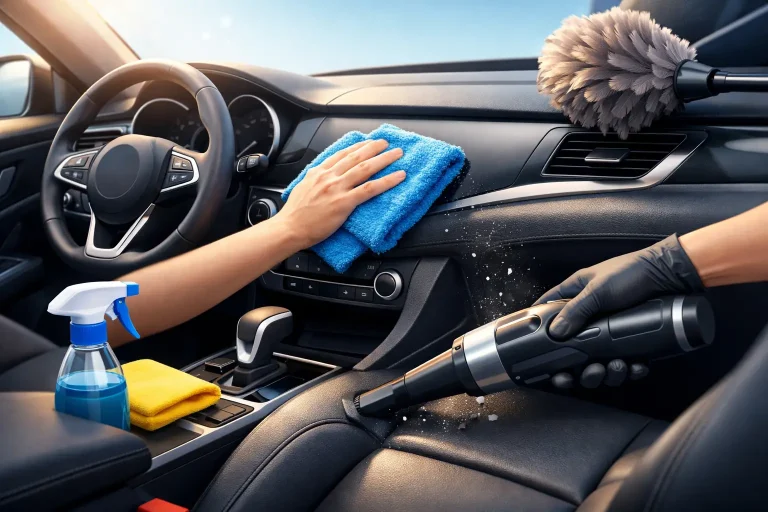
That light gray film on your dashboard usually comes back faster than it should. If you have been wondering how to keep car interior dust free, the real answer is not wiping harder. It is reducing what creates dust, cleaning with the right materials, and protecting interior surfaces so they do not hold onto every particle that comes through your doors, vents, and shoes.
Dust inside a vehicle is a mix of outside dirt, skin cells, fabric fibers, pollen, and fine debris carried in through daily use. In New England, that gets worse fast. Sand, road salt residue, dry air, and frequent in-and-out traffic all make interiors look dull sooner than most drivers expect. The good news is that a cleaner interior is usually about consistency and technique, not constant deep cleaning.
Why dust builds up so quickly inside a car
Most people blame the dashboard because that is where dust is easiest to see. In reality, the problem starts lower and earlier. Floor mats trap dry debris, shoes grind it down into finer particles, and airflow from driving or using the HVAC system moves that material upward. Once it lands on textured plastics, leather, vinyl, or screens, it becomes much more noticeable.
Cabin filters also matter more than people think. If the filter is loaded up, your ventilation system can push dusty air back into the cabin instead of helping clean it. Add pet hair, kids, commuting, parking outside, and cracked windows, and even a recently cleaned interior can start looking neglected within days.
That is why the best approach is not a single wipe-down. It is a system.
How to keep car interior dust free for longer
If you want better results, start by changing the order of how you clean. Many drivers wipe surfaces first, then vacuum. That tends to move loose dust around and send some of it right back into the air. Vacuuming first removes the heavier material so your final wipe actually stays cleaner.
Begin with the floors, mats, seat creases, and under-seat areas. Use a vacuum with enough suction to pull dust out of carpet fibers instead of just lifting the top layer. If your mats are rubber, remove them and clean them outside the vehicle before putting them back in. If they are carpeted, make sure they are fully dry before reinstalling, because damp fibers can hold dirt and create a musty smell over time.
After vacuuming, use a clean microfiber towel on hard surfaces. This is where product choice matters. A dry paper towel usually just pushes dust around, and low-quality towels can leave lint behind. A lightly damp microfiber towel captures fine particles without scratching piano black trim, gauge clusters, or infotainment screens.
For vents, buttons, seams, and tight trim edges, a soft detailing brush helps lift trapped dust without marring the surface. Brush gently while vacuuming nearby if possible. That keeps loosened debris from settling somewhere else.
The surfaces that hold the most dust
Not all interior materials behave the same way. Textured dashboards and plastic trim tend to trap dust because the surface has more tiny recesses. Glossy trim shows every particle immediately, even if there is not much there. Leather and vinyl collect less visible dust than cloth, but they still attract it if they are dry or coated with greasy dressings.
This is where many DIY jobs go wrong. Shiny interior products can make a vehicle look freshly cleaned for a day, but they often leave behind a residue that attracts more dust. The finish may look darker and glossier at first, yet it becomes a magnet for lint, pollen, and fine debris. A clean, satin-finish protectant is usually the better choice if your goal is a truly dust-resistant interior.
On cloth seats and carpet, brushing and vacuuming are more important than surface wiping. Dust settles into fabric long before it becomes visible. If your car smells stale or the cabin always looks hazy in sunlight, soft surfaces may be holding more contamination than you realize.
Small habits that make a big difference
A dust-free interior is easier to maintain when less debris enters the vehicle in the first place. That sounds obvious, but a few simple habits usually outperform frequent quick wipes.
Keep a dedicated set of floor mats that fit well and are easy to clean. Shake them out regularly instead of waiting until they look dirty. Avoid leaving paper receipts, napkins, and loose items in door pockets or center consoles, since those break down into lint and dust over time. If you transport pets often, a seat cover can reduce hair and dander buildup significantly.
It also helps to keep windows closed when possible, especially during pollen season or on dry, windy days. Even a slight crack can pull in a surprising amount of airborne dust while driving. Parking in a garage helps, but if that is not an option, choosing shaded areas away from active construction, gravel lots, or heavy traffic can reduce how much dust settles both outside and inside your vehicle.
One more overlooked habit is cleaning your own tools. If your microfiber towels are washed with fabric softener or mixed with lint-heavy laundry, they may spread debris instead of removing it. Clean towels, used correctly, make routine upkeep much easier.
Your cabin air filter deserves attention
If you want to know how to keep car interior dust free beyond surface cleaning, check the cabin air filter. This is one of the most practical upgrades for reducing airborne particles inside the vehicle, especially if you commute often, drive with passengers, or deal with allergy season.
A clogged or overdue filter limits airflow and can allow more dust, pollen, and road debris to circulate through the vents. Replacing it at the right interval can improve not only interior cleanliness, but also air quality and HVAC performance. Some drivers need replacement more often than the standard schedule suggests, particularly if they drive on back roads, near construction, or through areas with heavy seasonal debris.
If your vents blow weakly, your windshield hazes up quickly, or you notice a dusty smell shortly after cleaning, the cabin filter is worth checking sooner rather than later.
When home maintenance is enough and when it is not
For lightly used vehicles, a weekly light vacuum and wipe-down may be enough to stay ahead of dust. For family vehicles, work commuters, or cars carrying pets, sports gear, or frequent passengers, maintenance usually needs to happen more often.
There is also a point where simple upkeep stops being efficient. If dust keeps returning almost immediately, trim looks chalky, vents are packed with buildup, or fabric and carpets have not been thoroughly cleaned in a long time, a deeper interior service can reset the vehicle properly. Professional detailing reaches the areas most owners miss and uses tools and products that clean more thoroughly without leaving behind residue.
That matters because a truly clean interior is easier to maintain afterward. Once embedded debris is removed, surfaces are properly cleaned, and the right protection is applied, routine dusting becomes faster and more effective. For busy professionals and families, that usually means less time fighting the same problem every weekend.
At SPS Auto Detailing, we often see vehicles that have been cleaned regularly but not strategically. The difference after a proper interior detail is not just appearance. It is how much longer the interior stays crisp, comfortable, and easier to maintain.
A realistic maintenance schedule
The best schedule depends on how you use your car. A garage-kept weekend vehicle can go longer between major cleanings. A daily driver that handles school drop-offs, commuting, and errands will need more frequent attention.
As a baseline, a light vacuum every one to two weeks and a gentle surface wipe once a week works well for many drivers. Mats should be cleaned as soon as visible debris builds up. A deeper interior cleaning every few months helps prevent dust from settling into carpets, vents, and trim where it becomes harder to remove.
If you live in areas of New Hampshire, Massachusetts, Maine, or Vermont where seasonal road conditions add sand, salt, and fine grit, your winter-to-spring transition is especially important. That is when interiors often need a more thorough reset.
The goal is not perfection
No vehicle stays completely dust free forever. Even well-kept interiors collect particles from normal use. The goal is to slow the buildup, make cleaning easier, and avoid the kind of neglected residue that makes an otherwise nice vehicle feel tired.
A cleaner interior does more than look good. It improves comfort, supports resale value, and makes every drive feel better. The best results come from simple habits, better products, and knowing when your vehicle needs more than a quick wipe with whatever is in the garage.
If your interior seems dusty no matter what you do, that usually means the issue is not effort. It is that the surfaces, fabrics, and airflow system need a more complete reset before maintenance can start working the way it should.