
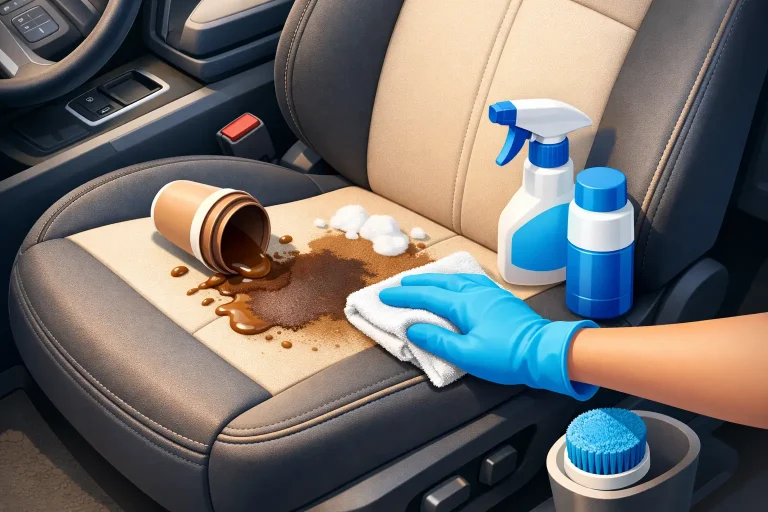
That coffee spill usually happens at the worst possible moment – right after a sharp turn, during the school drop-off line, or five minutes before a meeting. If you’re looking for how to remove coffee stains from car seats, the good news is that most spills can be corrected if you act quickly and use the right method for the seat material.
The key is not to scrub harder. It is to clean smarter. Coffee is a mix of water, oils, tannins, and sometimes milk and sugar, which means the stain you see is only part of the problem. If it soaks into the padding, you can also end up with lingering odor, residue, or a ring that keeps coming back after the surface looks clean.
How to remove coffee stains from car seats without making it worse
The first step is containment. Use a clean microfiber towel or absorbent cloth to blot the spill immediately. Press down firmly to lift as much liquid as possible, but do not rub side to side. Rubbing spreads the stain, pushes it deeper into the fabric, and can rough up the fibers.
If the spill is fresh, blot until the towel stops pulling up moisture. If it has already dried, lightly dampen the stained area with cool water first. That helps loosen the coffee so you are not only cleaning the top layer.
Before applying any cleaner, identify the seat material. Cloth, suede-like materials, vinyl, and leather all respond differently. Using the wrong product can leave discoloration, stiff spots, or damage to protective coatings.
For cloth car seats
Cloth is the most forgiving material, but it also absorbs the fastest. Start with a simple cleaning solution of mild dish soap and warm water, or a dedicated interior fabric cleaner if you have one. Apply the cleaner to a towel or soft brush rather than pouring it directly on the seat. You want the fabric damp, not saturated.
Work the area gently in short motions, focusing on lifting the stain rather than grinding it into the seat. Then blot again with a separate damp microfiber towel to remove the cleaner and dissolved coffee residue. Follow that with a dry towel to absorb as much moisture as possible.
If the stain remains, a second pass is often more effective than a stronger chemical. Many people overcorrect at this stage with heavy household cleaners, but that can bleach the fabric or leave behind sticky residue that attracts more dirt.
For older stains, a fabric-safe upholstery cleaner with stain-lifting capability is usually the better choice. Let it dwell for the time listed on the label, agitate lightly, and blot thoroughly. A wet-dry vacuum helps if the spill reached deeper into the cushion, because it pulls out moisture and contamination that a towel cannot reach.
For leather car seats
Leather needs a different approach. Coffee can stain leather, especially if the spill sits long enough to work into the pores or seams, but aggressive cleaners can do more harm than the original spill.
Start by blotting the area with a dry microfiber towel. Then wipe it with a slightly damp towel to remove surface residue. If a stain remains, use a leather-safe cleaner applied to the towel first, not directly onto the seat. Clean in light, controlled passes and avoid over-wetting stitched areas.
After the stain is removed, dry the area and apply a quality leather conditioner if the cleaner recommends it. That helps restore balance to the surface and reduces the chance of the leather feeling dry or looking uneven afterward.
If the coffee had cream or sugar in it, cleanup matters even more. Those additives leave behind organic residue that can become tacky, attract dust, or create odor in warm weather.
What to avoid when removing coffee stains
A lot of DIY stain removal problems come from using the wrong tool or too much product. Hot water can set some stains more firmly. Harsh all-purpose cleaners can strip color or damage leather coatings. Glass cleaner, bleach-based sprays, and heavy degreasers have no place on most automotive interiors.
It is also easy to over-saturate the seat. When too much liquid reaches the foam underneath, the visible stain may fade while moisture and odor stay trapped below. That is when a simple spill turns into a deeper interior cleaning issue.
Steam can help in some cases, but it depends on the material and the severity of the stain. Used properly, steam loosens residue and sanitizes. Used incorrectly, it can spread the stain, overheat delicate materials, or push contamination deeper. This is one of those areas where professional technique makes a real difference.
When coffee stains become odor problems
If your seat still smells like coffee after cleaning, the issue is usually below the surface. This is common with larger spills, especially in cloth interiors. Milk-based coffee drinks are the worst offenders because proteins and sugars soak into the padding and continue to break down over time.
Surface cleaning alone will not always fix that. You may need extraction to flush the affected area and remove what is trapped in the seat foam. In some cases, the carpet or seat tracks were hit too, and those hidden areas continue holding odor even after the seat looks clean.
That is why a stain that seems minor at first can keep coming back. The top dries, but residue underneath wicks upward. You clean it again, and the same spot reappears a day later. That usually means the contamination was never fully extracted.
How to remove old coffee stains from car seats
Old stains are more stubborn, but not always permanent. The process is similar to fresh spill cleanup, just slower and more deliberate. Rehydrate the stained area slightly with cool water or a fabric-safe cleaner, allow a short dwell time, and blot or extract. Expect to repeat the process.
With old coffee stains, patience matters more than force. Scrubbing aggressively can fuzz cloth seats, create uneven wear, or spread the stain into a larger ring. If the spot has already been treated with random household products, the challenge gets harder because you may be dealing with residue from both the spill and the failed cleanup attempt.
For leather, old stains can sometimes darken the finish or settle into creases. Some come out completely. Others improve significantly but not perfectly, especially if the material is light-colored and the spill sat for weeks. A realistic approach is important. The goal is the best possible correction without damaging the seat.
When to call a professional detailer
If the spill is large, the stain is old, or the seat still smells after your first cleanup attempt, professional detailing is often the better value. Proper interior stain removal is not just about stronger products. It is about matching the right chemistry, agitation, moisture control, and extraction method to the material.
That is especially true for luxury interiors, perforated leather, light-colored upholstery, and vehicles where resale condition matters. A rushed DIY fix can leave watermarking, texture changes, or product residue that is harder to correct than the original stain.
A professional detailer can also evaluate whether the contamination reached adjacent surfaces, including center consoles, seatbelt webbing, carpet edges, and stitching channels. Those areas are easy to miss and can hold both staining and odor.
For busy drivers and families, convenience matters too. If your vehicle is your office, your shuttle, or your daily reset between appointments, having the issue handled correctly the first time is often worth more than spending a weekend experimenting with cleaners.
Keeping the next spill from becoming a bigger problem
Coffee spills happen. The difference is how quickly they are addressed and whether the interior has any protection in place. Regular interior maintenance makes cleanup easier because dirt and residue are not already embedded in the material. Protected surfaces also tend to release stains faster than neglected ones.
It helps to keep two clean microfiber towels in the car at all times. One can blot the initial spill, and the other can be lightly dampened for follow-up cleanup. Even that small step can dramatically reduce how much coffee sets into the seat before you get home.
If you transport coffee often, especially during commutes or with kids in the vehicle, occasional deep interior cleaning is not overkill. It is preventive care. At SPS Auto Detailing, we see the difference every day between a quick surface wipe and a proper interior treatment that protects both appearance and long-term value.
A coffee stain does not have to become a permanent reminder of one rough morning. Handle it quickly, use the right method for your seat material, and when the spill goes deeper than the surface, get it corrected before it settles in for good.