A lot of people ask for a “full detail” when what they really mean is, “I want my car to feel clean again.” That is a fair goal, but it also explains why there is so much confusion around what does full car detailing include. The phrase sounds straightforward, yet the actual scope can vary a lot depending on the shop, the condition of the vehicle, and whether you are booking a cosmetic refresh or a deeper restorative service.
At a professional level, full car detailing usually means a thorough interior and exterior cleaning that goes well beyond a standard car wash or quick vacuum. It is designed to clean hard-to-reach areas, improve appearance, and help preserve the surfaces that affect comfort, pride of ownership, and long-term value. For many drivers, especially in New England where road salt, sand, moisture, and seasonal debris take a toll, detailing is not a luxury add-on. It is part of protecting the vehicle.
What does full car detailing include on the exterior?
On the outside, a full detail starts with a proper wash, but not the kind you get from an express tunnel. A professional exterior detail typically begins with a pre-rinse and foam treatment to loosen grime, followed by a careful hand wash using methods that reduce the chance of adding swirl marks. Wheels, tires, wheel faces, and often the barrels are cleaned separately because brake dust and road film build up differently there than on painted panels.
From there, attention usually shifts to the details most quick washes miss. Door jambs are cleaned. Badges, trim edges, fuel doors, and grilles are addressed by hand. Bugs, light tar, sap, and surface fallout may be removed if they are present. Tires are dressed, exterior glass is cleaned, and trim may be conditioned depending on the package.
A more complete full detail often includes decontamination. That can mean chemical treatment to remove embedded contaminants and a clay bar or clay mitt process to pull bonded debris from the paint. If you run your hand across freshly washed paint and it still feels rough, that is the kind of issue decontamination is meant to solve.
What a full detail does not always include is paint correction. This is one of the biggest misunderstandings in the industry. Your vehicle may come out cleaner, glossier, and noticeably better looking, but scratches, oxidation, and swirl marks usually require machine polishing. Some shops bundle a light polish into premium details, while others keep it separate because correction adds time, labor, and technical risk. That distinction matters if you are expecting showroom-level paint clarity.
What does full car detailing include on the interior?
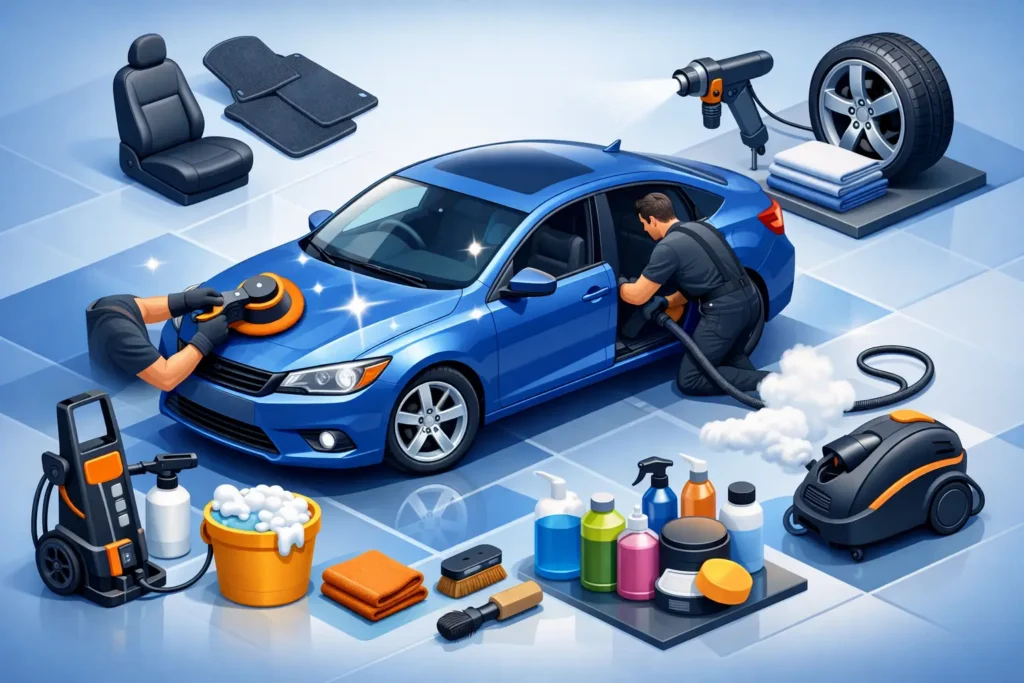
Inside the vehicle, a real full detail is much more than a quick wipe-down. It usually starts with removing loose debris through a detailed vacuuming of carpets, mats, seats, trunk space, and crevices. Compressed air or specialty tools may be used to reach under seat tracks, around buttons, inside cupholders, and along tight seams where dust and crumbs collect.
After that, interior surfaces are cleaned based on material type. Dashboards, consoles, door panels, vents, and hard plastics are wiped and treated with appropriate products. Leather seats may be cleaned and conditioned. Cloth seats may be shampooed or spot-treated if needed. Carpets and floor mats are often deep cleaned to lift stains, salt residue, and embedded dirt.
Interior glass is cleaned as part of the process, and odor reduction may be addressed if the issue is light and surface-level. If the vehicle has pet hair, sand, food spills, makeup residue, or heavy staining, those issues can absolutely be improved, but they may require extra labor. A heavily used family SUV and a well-kept weekend car do not take the same amount of time to detail, even if both are booked under the same category.
This is where professionalism matters. A qualified detailer will not treat every surface the same way. Piano black trim scratches easily. Matte finishes need special care. Leather, vinyl, plastic, and fabric all respond differently to cleaners and agitation. A proper interior detail is about results, but it is also about using the right method for each material.
What full detailing usually includes – and what it may not
If you want a practical way to think about it, full detailing usually covers deep cleaning, surface restoration, and presentation. It often includes the full wash process, wheel and tire cleaning, exterior decontamination as needed, interior vacuuming, interior surface cleaning, glass cleaning, mat cleaning, and finishing touches that leave the vehicle looking complete.
What may not be included are engine bay detailing, stain extraction beyond a basic level, pet hair removal, headliner cleaning, mold remediation, ozone treatment, paint correction, ceramic coating, or paint protection film. These are often separate services because they involve more time, more product, or a higher level of technical skill.
That is not a bait-and-switch. It is simply the reality that “full detail” is a broad term. The best providers are transparent about what is included before the appointment starts.
Why the condition of the vehicle changes the service
Two vehicles can request the exact same package and need very different work. A commuter car with light dust and some pollen can be brought back quickly. A truck that has gone through a New England winter with salt buildup in the carpets, road film on the paint, and grime packed into the wheel wells will take far more effort.
That is why experienced detailers often ask questions before giving a final quote. They may want photos or a quick in-person assessment. This is especially common for vehicles with excessive dog hair, smoke odor, staining, sand from beach trips, or neglected paint.
For customers, this is actually a good sign. It shows the company is trying to match the service to the real condition of the car instead of forcing every vehicle into a generic checklist.
Full detail vs. add-on protection services
A full detail focuses on cleaning and improving condition. Protection services go further. If your main goal is to keep the vehicle cleaner longer, protect the paint, or reduce wear over time, you may want to pair detailing with a coating or correction service.
For example, after the paint is properly cleaned and prepared, a ceramic coating can add durable hydrophobic protection and make maintenance easier. If the paint has visible swirls or haze, polishing or paint correction may be the better first step before any coating is applied. Interior protection can also help on leather, fabric, and high-touch surfaces, especially in vehicles used by kids, pets, or daily commuters.
This is where a premium provider can add real value. Instead of just selling the biggest package, they should help you decide whether you need a one-time reset, ongoing maintenance, or a more advanced correction and protection plan.
How to tell if you are getting a true full detail
The easiest way is to ask what is included and how the service is performed. A quality detail should be clearly defined. You should know whether stain treatment is included, whether the paint will be decontaminated, whether leather gets conditioned, and whether polishing is part of the appointment or a separate recommendation.
You should also pay attention to credibility. Certification, insurance, process transparency, and communication matter. When a company explains the work clearly, sets realistic expectations, and gives you updates instead of vague promises, it usually reflects the same discipline in the service itself. That is one reason customers who care about long-term vehicle care often prefer a professional shop or mobile provider with documented standards rather than chasing the lowest advertised price.
At SPS Autocare, that level of clarity is part of the experience. For customers who value convenience as much as results, knowing exactly what is being done to the vehicle is just as important as seeing the finished shine.
Is full car detailing worth it?
For most vehicle owners, yes – if the service matches the need. If your car only has light dust and a few fingerprints, a maintenance cleaning may be enough. If the interior feels tired, the paint feels rough, or the vehicle has taken on the wear of daily life, a full detail can make a dramatic difference in both appearance and comfort.
It is also one of the more practical ways to protect resale value. Clean carpets, well-kept leather, clear glass, and cared-for paint tell a better story than a neglected cabin and faded finish. That matters whether you drive a family SUV, a luxury sedan, or the truck you rely on every day.
The right full detail should leave your vehicle cleaner, healthier, easier to maintain, and more enjoyable to own. If you are comparing options, do not just ask for the price. Ask what the service actually includes, how the vehicle will be treated, and what the detailer recommends based on its condition. That is usually where the best decision starts.