A week after a fresh detail, the front bumper gets peppered with road rash from highway miles, sand, and loose gravel. That is usually the moment people ask, is paint protection film worth it, or is it just an upgrade for exotic cars and weekend toys?
For many drivers in New England, it is a fair question. Between winter salt, highway debris, bug acids, and tight parking lots, modern paint takes a beating. Paint protection film, often called PPF or clear bra, is one of the few products that can physically absorb that damage before your paint does. But that does not mean it is the right choice for every car or every budget.
Is paint protection film worth it for your vehicle?
The short answer is yes for many owners, but not always in the same way. PPF is most worthwhile when the cost of repainting, correcting, or living with visible damage is higher than the cost of prevention. It tends to make the most sense for newer vehicles, luxury vehicles, leased vehicles with strict condition standards, and daily drivers that see a lot of highway use.
If you just bought a car and want to keep it looking close to new, film can save the high-impact areas from the chips and scuffs that usually show up first. If your vehicle already has noticeable rock chips, scratches, or peeling clear coat, PPF may still help going forward, but it will not erase existing damage unless paint correction or other prep work is done first.
This is where a lot of frustration comes from. Some people expect film to behave like a magic cosmetic fix. It is not. It is a sacrificial layer designed to protect the finish underneath.
What paint protection film actually does
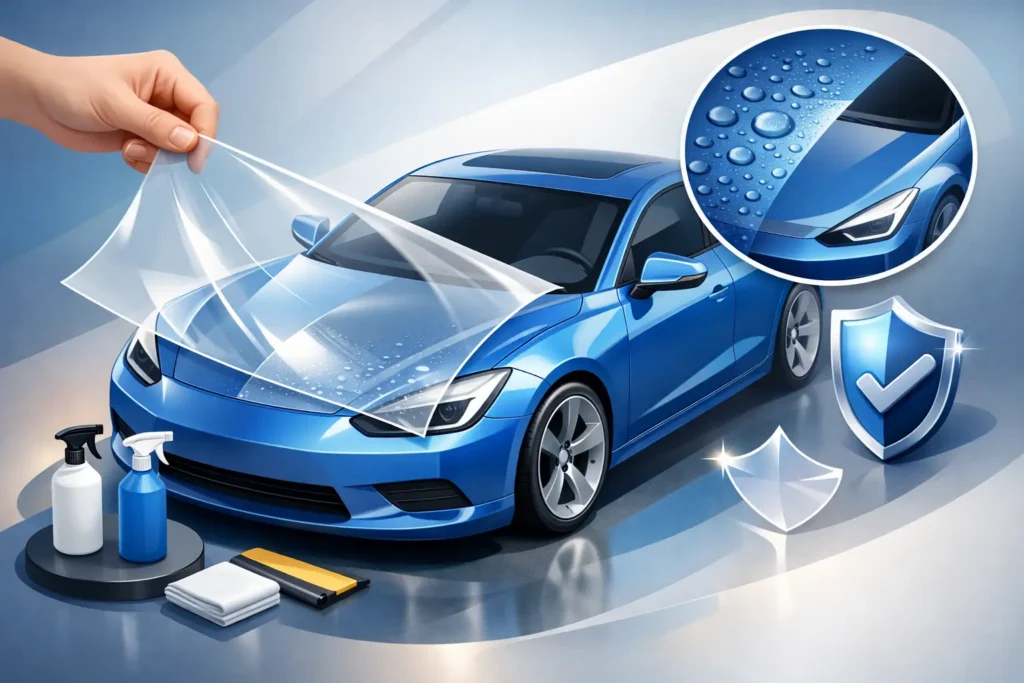
PPF is a transparent urethane film applied over painted surfaces. Quality films are engineered to resist rock chips, light scratches, bug splatter, road salt, and staining. Many also have self-healing properties, which means light surface marks can relax out with heat.
That protection matters most on the parts of the vehicle that get hit first. Think front bumpers, hoods, fenders, side mirrors, rocker panels, door edges, and sometimes rear wheel arches. On some vehicles, these areas collect damage fast, especially if you commute regularly or drive in mixed weather year-round.
Film is different from ceramic coating. Ceramic coating adds gloss, hydrophobic behavior, and easier maintenance, but it does not provide the same physical impact resistance. If your main concern is rock chips, coating alone is not the answer.
Where PPF delivers the best value
PPF tends to provide the strongest value when the owner cares about appearance over time, not just how the car looks this month. A black SUV, a new luxury sedan, or a performance car with soft paint can show wear surprisingly fast. Once the front end is chipped up, fixing it usually means touch-up work or repainting, and repainted panels rarely carry the same appeal as original paint.
For busy professionals and families, there is another kind of value here. Preventing damage is easier than correcting it later. If your vehicle is something you rely on daily and want to keep looking sharp without constantly chasing cosmetic issues, film reduces that cycle.
It also helps resale and trade-in appeal, especially on well-kept vehicles. Buyers and dealers notice clean front ends. They also notice when a vehicle has been cared for by someone who thinks ahead.
When paint protection film may not be worth it
There are honest cases where the answer is no. If you keep cars only a short time, park mostly in a garage, drive very little, and are not particularly bothered by a few chips over the years, the cost may not make sense. The same goes for older vehicles where the paint is already heavily worn and the owner is not planning a broader restoration.
Budget matters too. Good PPF is not cheap, and cheap PPF is rarely a bargain. A poorly installed film can lift, trap contamination, show stretch marks, or leave edges that collect dirt. If the install quality is low, the whole value equation falls apart.
This is why professional prep and installation matter so much. Film highlights whatever is underneath it. If the paint needs correction first, skipping that step may leave you paying to preserve imperfections.
Full front, partial, or full-body?
One reason people struggle with the question is that PPF is not a single-price service. Coverage changes everything.
A partial front package usually covers the most vulnerable areas, but it can leave a visible line depending on the design. A full front package offers more complete and consistent protection across the leading surfaces. Full-body coverage is the premium option and makes the most sense for high-end vehicles, specialty paint, or owners who want maximum preservation.
For many daily drivers, full front coverage is the sweet spot. It protects the areas that take the most abuse while keeping cost more manageable than full-body film. If you do frequent highway driving in New Hampshire, Massachusetts, Maine, or Vermont, this is often where value becomes very clear after a single winter or road-trip season.
The real cost of not protecting the paint
People usually compare PPF to doing nothing, but that is not the most accurate comparison. A better comparison is PPF versus repeated paint correction, touch-up attempts, repainting, or simply accepting permanent wear on a vehicle you otherwise want to maintain well.
Repainting a bumper or hood can be expensive, and matching factory paint is not always perfect. Touch-up paint helps, but it rarely disappears on close inspection. Paint correction can improve swirls and surface defects, but it cannot reverse a stone chip that has already removed paint.
When you look at PPF as a way to avoid those compromises, the price starts to make more sense. Not for everyone, but certainly for the owner who notices condition and wants to preserve it.
What to expect from a professional installation
A quality PPF installation starts well before the film touches the panel. The vehicle should be thoroughly cleaned and decontaminated. In many cases, the paint should be corrected to remove swirls or haze so the finish underneath looks as good as possible. Then the film is precisely installed with careful attention to fit, edge alignment, and finish quality.
This is where experience and standards matter. Certified, insured professionals tend to approach PPF as a craft, not just an add-on service. That affects everything from prep to pattern selection to final inspection. At SPS Autocare, that kind of detail-focused approach is part of what customers are really paying for when they choose premium protection.
Is paint protection film worth the cost in New England?
In this region, the answer leans more strongly toward yes than it might in milder climates. Road salt, sand, freeze-thaw cycles, and long highway stretches all increase the amount of abuse your paint sees. Even if the vehicle is washed regularly, damage from impact and contamination can still build up quickly.
That does not mean every car needs full-body film. It means local conditions make targeted protection more practical. The harsher the environment and the more you drive, the easier it is to justify protecting the areas that are guaranteed to get hit.
The best candidates for PPF
If you are trying to decide, the clearest candidates are easy to spot. New vehicles benefit the most because they can be protected before damage starts. Luxury and performance vehicles often justify the cost because refinishing is more expensive and appearance matters more to the owner. Daily highway commuters see strong value because impact exposure is constant. And drivers who care about keeping their vehicle long term usually appreciate the payoff more than those who change cars every couple of years.
On the other hand, if your vehicle is older, already heavily chipped, and mainly used as basic transportation, you may get better value from a thorough detail, paint correction where possible, and a maintenance plan that keeps it looking presentable.
The right decision comes down to how you use the vehicle, how long you plan to keep it, and how much visible paint damage will bother you six months from now, not just today.
Paint protection film is worth it when you want to preserve a vehicle, not just clean it. If that sounds like how you think about car care, the smartest move is usually to protect the vulnerable areas before the damage becomes the new normal.