If you have ever stared at a rock chip on an otherwise beautiful hood, you already understand why the question of paint protection film vs ceramic coating matters. Both services protect your vehicle, both improve the finish, and both can save you money over time. But they do very different jobs, and choosing the wrong one can leave you disappointed even if the installation itself is excellent.
For drivers in New England, this decision gets even more practical. Highway debris, winter sand, road salt, tree sap, bug splatter, and unpredictable weather all put real stress on your paint. The right protection depends less on what sounds premium and more on how you use your vehicle, where you drive it, and how long you plan to keep it.
Paint protection film vs ceramic coating: the real difference
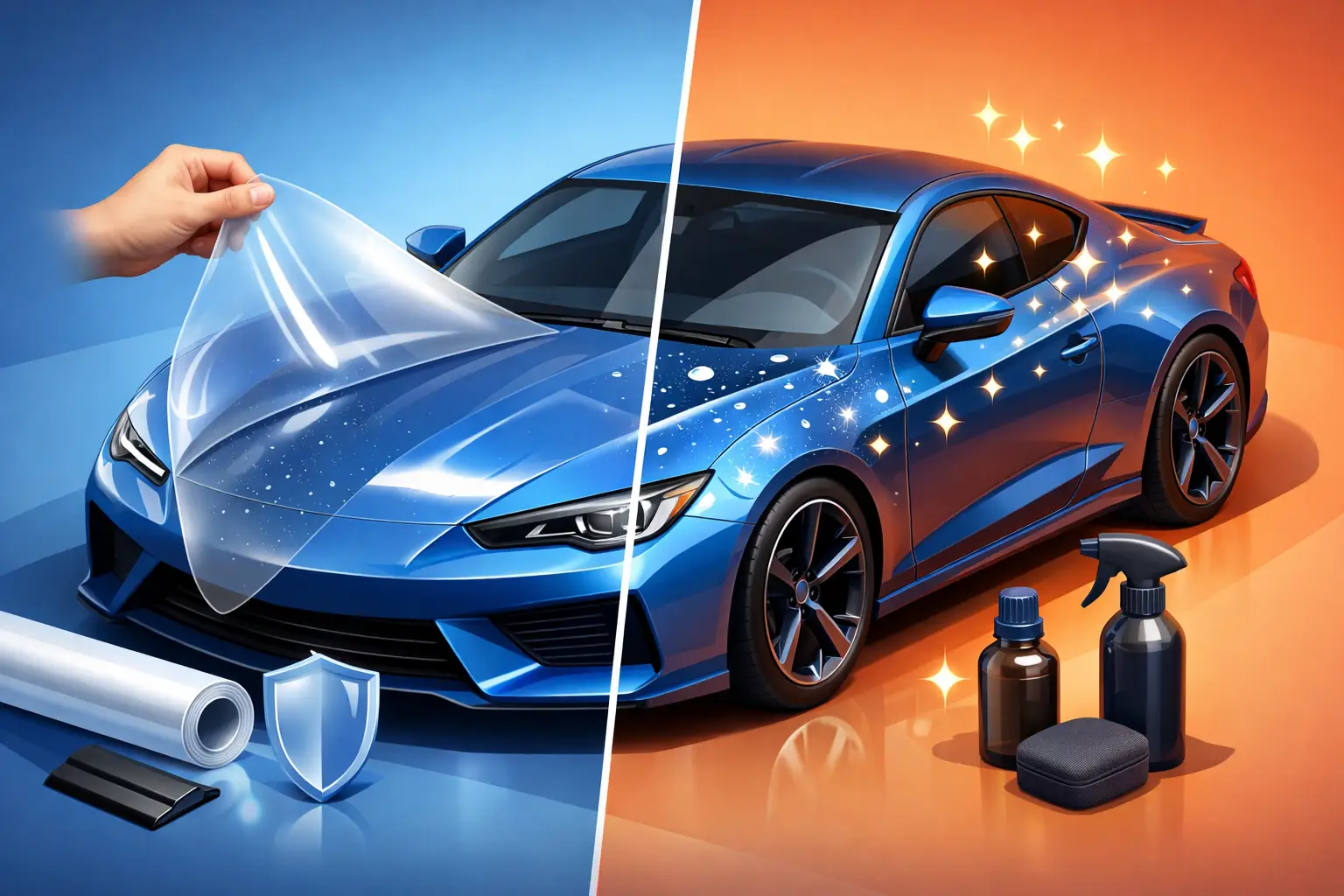
The simplest way to think about it is this: paint protection film is a physical barrier, while ceramic coating is a chemical barrier.
Paint protection film, often called PPF or clear bra, is a transparent urethane film applied over painted surfaces. Its main job is impact protection. It helps absorb damage from rock chips, light scratches, road debris, and other physical hazards that would otherwise hit the paint directly.
Ceramic coating is a liquid-applied protective layer that bonds to the clear coat. Its main job is surface protection and easier maintenance. It adds gloss, improves water behavior, helps resist contaminants, and makes washing easier, but it is not designed to stop rock strikes the way film can.
That distinction is where most confusion starts. People often hear that ceramic coating protects paint and assume it covers every kind of threat. It does protect, but not in the same category as film. If chip resistance is the priority, coating alone is not enough.
What paint protection film does best
PPF is the stronger choice when your concern is preserving the actual paint from physical damage. Front bumpers, hoods, fenders, mirror caps, rocker panels, and other high-impact areas benefit most because those panels take the brunt of road abuse.
For someone driving daily on highways or behind trucks, film can make a major difference. It helps prevent the kind of damage that polishing cannot fix because the paint is already broken. On luxury vehicles, newer cars, and darker finishes that show every imperfection, that protection is often worth the investment.
Modern film also looks far better than older versions. High-quality products are optically clear, self-healing to a degree with light surface marring, and designed to resist yellowing when properly maintained. That said, film is still a material sitting on the paint. The quality of the product and the precision of the installation matter a lot. Bad film work is noticeable.
PPF does have trade-offs. It costs more than ceramic coating, especially for full-body coverage. It also makes the most financial sense in areas that are actually vulnerable. Not every vehicle needs every painted panel wrapped. In many cases, a partial front package or full front package gives the best value.
What ceramic coating does best
Ceramic coating shines when you want a vehicle that stays cleaner longer and is easier to maintain. It creates a slicker surface, which means water beads and sheets more effectively, dirt releases more easily during washes, and contaminants are less likely to bond as aggressively to the finish.
That is especially useful in a region where road grime and seasonal contamination are part of normal driving. Coating helps reduce the labor involved in keeping the paint looking sharp. It also tends to enhance gloss and clarity, which is one reason so many owners love the look after installation.
A good ceramic coating is not just about shine. It can help resist UV exposure, chemical staining, bird droppings, bug residue, and light wash-induced marring better than unprotected paint. But it is not bulletproof. It will not stop a stone from chipping your bumper, and it will not make your vehicle maintenance-free.
This is where expectations matter. If your goal is easier upkeep, strong gloss, and broad environmental protection, ceramic coating is a smart option. If your goal is defense against impact, it is the wrong tool for the job by itself.
Which one lasts longer?
The honest answer is that longevity depends on the product, the prep work, the installation quality, and how the vehicle is maintained afterward.
Paint protection film often lasts for years when installed properly and cared for correctly. Ceramic coatings also offer multi-year durability, but the advertised lifespan on paper does not always reflect real-world conditions. Daily driving, tunnel washes, harsh winters, poor wash habits, and neglected contamination removal all affect performance.
This is one reason professional prep matters so much. If the surface is not cleaned, corrected, and properly prepared before either service is installed, the end result will not perform at its best. Protection is only as good as the foundation underneath it.
Cost matters, but so does the type of risk
When clients compare pricing, ceramic coating usually looks more approachable up front. PPF is typically the larger investment, particularly when covering the full front or full vehicle.
But cost should be weighed against the kind of damage you are trying to avoid. If your front end gets peppered with chips over two winters, repainting is expensive and usually less desirable than preserving factory paint in the first place. In that situation, PPF may save more value than it first appears to.
On the other hand, if your vehicle sees moderate local driving and your biggest frustration is constant washing, water spotting, and dull-looking paint, ceramic coating may be the better fit. The cheaper option is not automatically the better value, and the more expensive option is not automatically necessary.
Paint protection film vs ceramic coating for New England drivers
Regional conditions matter here. In New Hampshire, Massachusetts, Maine, and Vermont, vehicles deal with more than just sunshine and light rain. Winter traction materials, freeze-thaw cycles, long highway commutes, and rural back roads all increase wear on the finish.
That makes PPF especially appealing on high-impact zones. Front bumpers and hoods take repeated abuse from sand, salt, and debris. At the same time, ceramic coating makes year-round cleaning easier, which matters when buildup happens fast and washing windows are limited by weather.
For many owners in this area, the best answer is not one or the other. It is a combination.
When combining both makes the most sense
The strongest setup for many vehicles is PPF on the most vulnerable areas and ceramic coating over the remaining painted surfaces, and sometimes over the film as well depending on the system being used. That gives you impact resistance where the paint needs it most and easier maintenance across the vehicle.
This approach is especially common for new vehicles, luxury models, enthusiast cars, and anyone planning to keep a vehicle for years. It also makes sense for busy owners who want the finish protected without constantly worrying about upkeep.
Think of it as layered protection with different jobs. Film handles the hits. Coating handles the elements and the cleanup.
How to decide what your vehicle actually needs
Start with how you drive. If you spend a lot of time on the highway, commute long distances, or follow traffic in high-debris conditions, prioritize PPF at least on the front end. If you mostly want easier maintenance and a consistently cleaner look, ceramic coating may be enough.
Then consider your ownership plans. If this is a lease or a short-term vehicle, a modest protection strategy may be perfectly reasonable. If it is a new purchase you want to preserve long term, stronger protection up front usually makes more sense.
Also consider your standards. Some owners are unbothered by a few chips after a couple of years. Others notice every mark. Neither is wrong, but your tolerance should guide the decision. The best recommendation is the one that matches your expectations, not just the one with the most features.
At SPS Autocare, that is typically how the conversation should go – not a hard sell, but a clear explanation of what each service can and cannot do.
The mistake to avoid
The biggest mistake is treating ceramic coating like a substitute for film when chip protection is the goal. The second biggest mistake is paying for film everywhere when only a few high-impact areas truly need it.
Good vehicle protection is about fit. The right service should reflect your driving habits, your budget, your vehicle type, and the level of finish preservation you care about.
If you want your paint to stay easier to clean and look glossier, ceramic coating is often the right move. If you want to defend against chips and road rash, paint protection film is the better answer. And if you want the most complete result, combining both is often the smartest long-term investment.
The best protection plan is the one that matches your real life, because a beautiful finish only stays beautiful when the protection behind it makes sense.