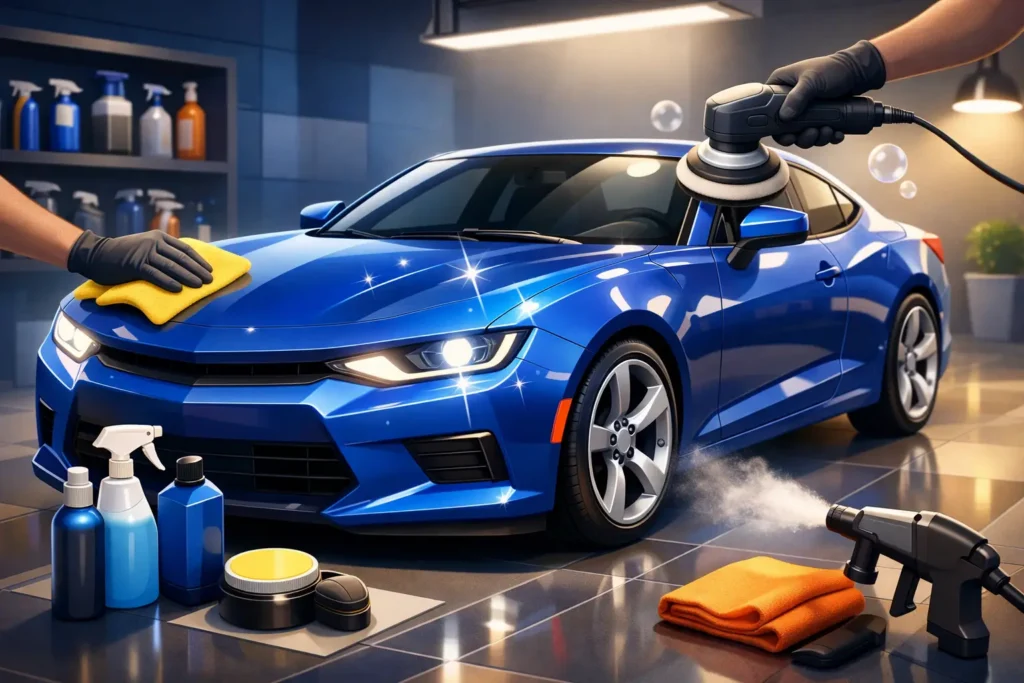
A vehicle that looks clean from ten feet away can still be carrying months of buildup in the paint, trim, carpets, and vents. That is the difference between a quick wash and showroom shine car detailing. When the goal is a finish that looks exceptional in direct sun, feels clean in every touchpoint, and holds up between appointments, the process matters just as much as the products.
For many drivers in New England, that standard is not about vanity. It is about protecting a vehicle from road salt, sand, UV exposure, tree sap, brake dust, spilled coffee, wet boots, pet hair, and the steady wear of daily use. A true detail addresses those problems at the source, then adds protection so the vehicle stays cleaner and easier to maintain.
What showroom shine car detailing really means
Showroom shine car detailing is often used as a catch-all phrase, but the best results are never created by gloss alone. Real showroom-level work combines correction, deep cleaning, and protection. The exterior should reflect light evenly, without the dullness, haze, or fine swirls that make paint look tired. The interior should feel fresh and reset, not just wiped down.
That usually starts with a careful wash process designed to reduce scratching, followed by decontamination to remove embedded fallout, road grime, and bonded debris. If the paint has lost clarity, polishing may be needed to restore depth and gloss. Trim, glass, wheels, and tires all need attention too, because a vehicle rarely looks complete if only the painted panels shine.
Inside, the same standard applies. A true detail reaches beyond the obvious surfaces. That means extracting dirt from carpets, cleaning upholstery and leather properly, treating stains with the right method, and addressing the dust and debris that settle into seams, cupholders, vents, and hard-to-reach edges.
Why the process matters more than the promise
Anyone can advertise a showroom finish. The real question is how that result is produced and how long it will last.
A rushed detail may create temporary gloss with dressings and fillers, but that shine tends to fade fast. In some cases, shortcuts can actually create problems, especially when aggressive chemicals are used on delicate surfaces or when paint is polished without proper inspection. On a luxury vehicle, that risk is even harder to justify. On a family SUV or commuter car, it still matters because damage is damage, regardless of badge.
Professional detailing should be methodical. Paint condition needs to be evaluated before correction begins. Interior materials should be cleaned with products suited to leather, fabric, plastics, piano black trim, touchscreen surfaces, and headliners. Protection should be recommended based on how the vehicle is used, not just what sounds impressive.
That is where certification, insurance, and documented standards make a difference. They signal that the work is not improvised. For customers who care about trust, convenience, and long-term results, that matters as much as the shine itself.
Exterior work that creates a real showroom finish
The exterior is where most people first notice the result, but it is also where technique shows.
A proper detail begins by safely removing loose contamination before any hand contact is made with the paint. Wheels and tires are cleaned separately because brake dust and road film are among the most stubborn forms of grime on a vehicle. After washing, chemical and mechanical decontamination can remove bonded particles that regular soap leaves behind. Without that step, paint often feels rough and looks flatter than it should.
If the goal is true showroom shine car detailing, polishing is often the turning point. Paint correction can reduce or remove light swirls, oxidation, water spotting, and other defects that mute gloss. Not every vehicle needs an aggressive correction, and not every owner wants that level of service. Sometimes a one-step polish is the best balance between improvement, time, and cost. Other times, a multi-stage correction is worth it, especially on darker colors or premium vehicles where imperfections are easier to see.
Protection comes next. Wax offers short-term warmth and gloss, while sealants and ceramic coatings provide longer-lasting defense and easier maintenance. The right choice depends on the vehicle, the owner’s expectations, and whether the car is parked outside, driven year-round, or exposed to harsh winter conditions.
Protection changes the ownership experience
The best detailing results do not end when the vehicle leaves the shop or driveway. They continue in the way the paint responds to weather, washing, and contamination afterward.
Ceramic coating is one of the clearest examples. It does not make a vehicle scratch-proof, and it is not a substitute for paint protection film in high-impact areas, but it can dramatically improve gloss, hydrophobic behavior, and ease of cleaning. That means less grime sticking to the surface and less effort required to maintain the finish over time.
For owners who want the strongest defense against chips and road rash, paint protection film may be the better fit on front-end impact zones. It depends on the vehicle and budget. The point is not to oversell one option. It is to match the protection strategy to how the vehicle is actually driven.
Interior detailing is where quality becomes obvious
A clean cabin changes how a vehicle feels every day. It also reveals whether a detailer is focused on appearance alone or on the full ownership experience.
Interior detailing should address more than crumbs and visible dust. Oils build up on steering wheels. Dirt settles into carpet fibers. Salt stains set into mats during winter. Spills seep into seams and padding. Odors linger in fabrics, especially in vehicles used by families, pet owners, commuters, or rideshare drivers.
A quality detail restores the environment people live in every time they drive. That can include vacuuming, compressed-air cleaning in tight areas, stain treatment, shampooing or extraction when needed, leather cleaning and conditioning, and careful cleaning of panels, screens, and trim. The result should feel genuinely refreshed, not overly glossy or masked with heavy fragrance.
Different vehicles need different levels of care
A weekend sports car, a three-row family SUV, and a daily-driven pickup do not need the same interior process. That is why good detailing is never one-size-fits-all.
For some customers, maintenance-level care keeps a relatively clean vehicle in excellent shape. For others, a deep interior reset is the better starting point, especially after a harsh season, a road trip, or years of accumulated wear. The right service should reflect the actual condition of the vehicle, not a generic package description.
Convenience matters almost as much as the finish
For busy professionals and families, the biggest obstacle to regular detailing is not interest. It is time.
That is why service model matters. Mobile detailing can be ideal for customers who want professional care at home or work without disrupting their schedule. Garage-based service may be better for more involved correction, coating, or weather-sensitive work. Pickup and drop-off options, service updates, and maintenance scheduling all make the experience easier to fit into real life.
Premium detailing should feel efficient, transparent, and worth the appointment. Customers should know what is being done, why it is being recommended, and what kind of result to expect. If a stain may improve but not disappear, that should be explained. If a scratch is too deep to remove safely, that should be communicated clearly. Honest expectations are part of premium service.
How often should you schedule showroom-level detailing?
It depends on usage, storage, and standards. A garaged luxury vehicle driven occasionally may need major correction far less often than a daily driver exposed to New England winters. A family vehicle with kids, pets, sports gear, and year-round use may benefit from more frequent interior attention.
For many owners, a full detail once or twice a year paired with maintenance services in between is the sweet spot. That approach protects the initial investment, keeps cleanup manageable, and helps preserve resale value. It also prevents the vehicle from slipping into a condition where restoration becomes more expensive and time-consuming.
At SPS Autocare, that long-term mindset is part of the value. A vehicle should not just look excellent for a day. It should stay easier to live with, easier to clean, and better protected through the seasons.
The best time to get a vehicle detailed is usually before the damage of neglect starts to feel normal. When your paint has lost its clarity, your interior feels tired, or washing no longer gives you the result you want, professional care can reset the standard and make every drive feel better again.