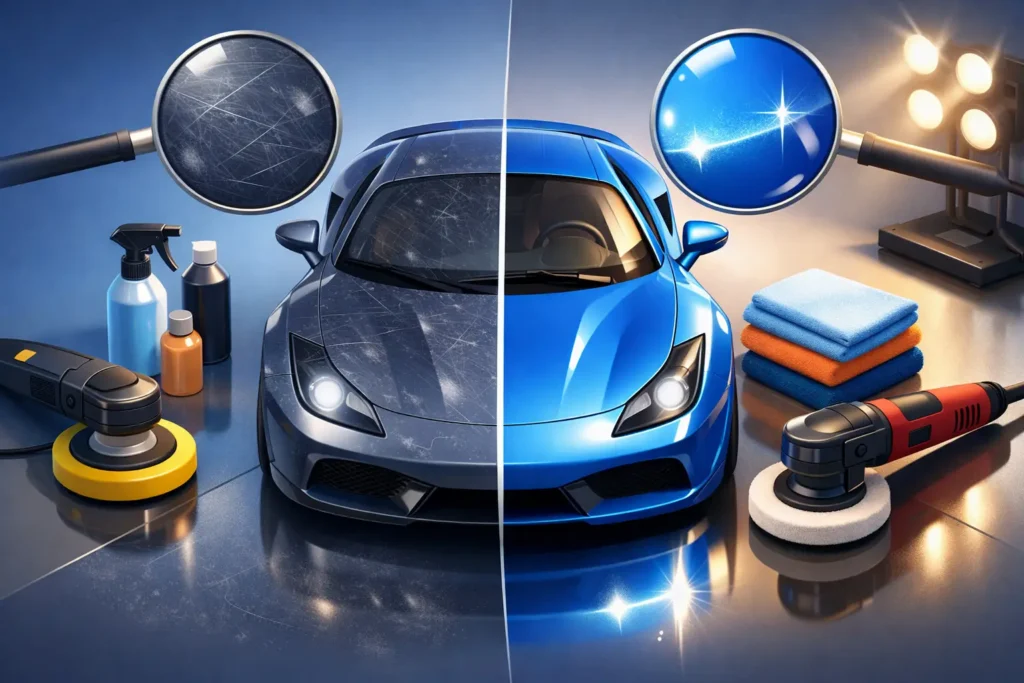
A black vehicle under direct sun tells the truth fast. What looks glossy in the shade can suddenly reveal swirl marks, haze, water spot etching, and fine scratches across every panel. That is why paint correction before after results matter so much – they show the difference between a car that is simply clean and one that has had defects professionally reduced or removed.
For many vehicle owners, the photos are what first get their attention. The paint looks deeper, sharper, and more reflective after correction. But the real value is not just in dramatic images. It is in understanding what changed, what did not, and what level of improvement makes sense for your vehicle, your budget, and your long-term goals.
What paint correction before after results actually show
Paint correction is the controlled polishing process used to remove or reduce defects in a vehicle’s clear coat. That includes swirl marks from improper washing, light scratches, oxidation, buffer trails, and certain types of staining or dullness. The before-and-after result is not a trick of lighting when the work is done properly. It is a measurable improvement in surface clarity.
The strongest paint correction before after results usually show three things at once. First, reflected light becomes cleaner and more defined. Second, the paint appears deeper because haze and micro-marring have been leveled out. Third, the finish looks more uniform across the panel instead of patchy or tired.
This is especially noticeable on black, navy, red, and other darker colors, but lighter vehicles benefit too. White and silver paint may not show the same dramatic contrast in photos, yet correction can still improve gloss, slickness, and overall finish quality in person.
Why the after looks so different
Most neglected paint is not suffering from one large defect. It is covered in thousands of tiny imperfections that scatter light. When light hits a scratched or swirled surface, the reflection looks blurry. Once those defects are corrected, the paint reflects more evenly. That is where the crisp, liquid-like finish comes from.
A proper correction also involves prep work, and that affects the final result. Washing, chemical decontamination, clay treatment, paint inspection, and panel-specific polishing choices all matter. If the surface is not fully cleaned and assessed before polishing starts, the after result may look good at first glance but fall short under real inspection lighting.
This is one reason professional service makes such a visible difference. The process is not just about making paint shiny. It is about matching pads, compounds, polish combinations, machine speed, pressure, and finishing technique to the condition of the paint.
Not every vehicle gets the same level of correction
This is where expectations need to stay realistic. Some paint correction before after results show near-total defect removal. Others show a major improvement without claiming perfection. Both can be the right outcome.
It depends on paint thickness, defect depth, vehicle age, prior polishing history, and owner goals. A newer luxury vehicle with light wash marring may respond beautifully to a one-step polish. An older daily driver with years of automatic car wash damage may need a multi-step correction to achieve a similar level of clarity.
Even then, not every scratch should be chased aggressively. If a defect is too deep, removing it completely could require taking off more clear coat than is safe or responsible. A skilled detailer knows when to improve a defect and when to preserve the integrity of the paint. That judgment is part of what separates quality correction from over-polishing.
Single-stage vs multi-stage results
A one-step correction usually aims for a strong cosmetic improvement in gloss and moderate defect removal. For many daily drivers, that is the sweet spot. It can dramatically improve appearance while keeping time, cost, and paint removal more conservative.
A two-step or multi-step correction is more intensive. The first stage cuts heavier defects, and the following stage refines the finish to maximize clarity and gloss. This approach often delivers the most dramatic before-and-after transformation, especially on darker paint or vehicles with visible swirling under sunlight.
Neither option is automatically better. The right choice depends on how damaged the paint is, how perfect you want it to look, and whether the vehicle is being prepped for ceramic coating, sale, show use, or long-term ownership.
What good results should look like in person
Photos help, but they are not the whole story. A strong after result should hold up in multiple lighting conditions, not just one flattering angle. Direct sun, LED inspection lights, cloudy daylight, and indoor garage lighting all reveal different things.
In person, you should notice better gloss, sharper reflections, reduced swirl visibility, and cleaner color depth. Metallic flake often appears more vivid after correction because the surface is no longer muting the finish. On solid colors, the paint tends to look richer and more even.
The best professionals are transparent about this. They do not promise every panel will look factory-new if the paint has deeper damage. They explain what is removable, what can be improved, and what may remain visible at certain angles.
Why some before-and-after photos can be misleading
Not all paint correction marketing is equal. Some photos are taken with different lighting, different panel angles, or a fresh layer of glaze or filler that temporarily hides defects. That can make the after image look stronger than the true correction result.
A trustworthy provider documents results consistently and speaks clearly about the process. They can explain whether the finish received a one-step enhancement, a heavier correction, or a refinement before ceramic coating. They should also be able to discuss maintenance, because even excellent correction work can be undone by poor washing habits.
For customers, the key is to look beyond pure shine. A car can be waxed and glossy while still hiding a lot of marring underneath. True correction improves the paint itself, not just the look of the product sitting on top.
The link between paint correction and ceramic coating
Many customers first consider correction because they want a ceramic coating. That pairing makes sense. Coating locks in the condition of the paint at the moment it is installed. If swirl marks and haze are still present, the coating will preserve them too.
That is why correction often comes first. It creates the finish worth protecting. Once the paint is properly corrected, a ceramic coating helps maintain gloss, improve washability, and add durable protection against environmental exposure. The better the prep, the better the final coated result tends to look.
For clients who want long-term value, this combination is often the most satisfying route. The vehicle does not just look better on delivery day. It becomes easier to maintain at a higher standard afterward.
Is paint correction worth it for a daily driver?
In many cases, yes. You do not need a garage-kept exotic for correction to make sense. A daily driver sees road film, improper washes, winter grime, bird droppings, and regular wear. Over time, all of that dulls the finish.
Correction can restore pride of ownership, improve resale presentation, and make a vehicle feel cared for again. For busy professionals and families, that has real value. If you spend time in your vehicle every day, the visual improvement is something you notice repeatedly, not just once.
At SPS Autocare, that conversation is typically about matching service to the owner’s goals rather than pushing the most aggressive package. Sometimes the right answer is a major transformation. Sometimes it is a smart improvement followed by protection and maintenance.
How to judge whether the results will last
Paint correction itself is permanent in the sense that removed defects do not come back on their own. What changes is how the vehicle is maintained after service. Poor washing techniques can quickly reintroduce swirls. Proper wash methods, quality towels, and ongoing protection help preserve the finish much longer.
This is where convenience matters too. Customers often invest in correction because they want the car to stay better, not because they want another item on their to-do list. Professional maintenance plans, safe wash routines, and protective services make a real difference in keeping those before-and-after gains visible.
The best paint correction before after results are not just dramatic on day one. They are supported by honest expectations, skilled workmanship, and a maintenance plan that respects the finish going forward.
If you are looking at your paint in the sun and seeing every flaw, the right next step is not guessing from photos alone. It is getting a professional assessment of what your vehicle’s paint can realistically become – and protecting that result once it gets there.