Sunlight is honest. It shows every swirl mark, light scratch, haze patch, and dull area your garage lighting can hide. If your vehicle still looks tired after a wash, this complete guide to paint correction will help you understand why – and what it actually takes to restore gloss the right way.
Paint correction is the process of removing defects from a vehicle’s clear coat to improve clarity, depth, and reflection. That usually means reducing or eliminating swirl marks, oxidation, water spot etching, buffer trails, light scratches, and general paint dullness. It is not a cover-up. A true correction changes the condition of the paint by leveling defects within the clear coat, not by masking them with fillers or temporary gloss enhancers.
That distinction matters because many vehicles look shiny for a few days after a quick polish, then the flaws return as soon as the residue washes away. Proper correction is slower, more technical work. It starts with prep, requires the right machine and pad combination, and depends on reading the paint carefully rather than chasing speed.
What paint correction really fixes
Most visible paint defects live in the upper portion of the clear coat. Swirl marks are the most common example. They usually come from improper washing and drying, automatic car washes, dirty towels, or aggressive brushing. In direct light, they create a spiderweb effect that makes even a newer vehicle look neglected.
Oxidation is another frequent issue, especially on vehicles exposed to New England weather year-round. It causes the finish to lose clarity and richness. Water spot etching can also become a bigger problem than people expect. If mineral-heavy water bakes onto the surface in the sun, those spots can bite into the clear coat and require polishing to remove.
Light scratches, random isolated deeper scratches, and holograms from poor machine polishing may also be correctable. The key word is may. Some defects sit too deep to remove safely. In those cases, a professional detailer may improve them significantly without chasing total removal and sacrificing clear coat thickness. Good paint correction is about results and restraint.
The complete guide to paint correction starts with the clear coat
Modern automotive paint usually includes a color coat protected by a clear coat on top. Correction targets that upper clear layer. When a machine polish removes a defect, it is usually removing a very small amount of surrounding clear coat until the area becomes more level and reflects light evenly.
This is why there is always a limit. Clear coat is not endless, and aggressive polishing is not automatically better polishing. A vehicle with very soft paint may correct quickly with a mild approach. A harder clear coat may need more cutting power. A repainted panel may behave differently than factory paint. That is where training and experience matter. The process is part science, part judgment.
A quality detailer will evaluate paint depth when appropriate, inspect under proper lighting, and choose a correction plan based on the actual condition of the vehicle. That plan should fit the goals of the owner too. A daily driver and a weekend garage-kept performance car often need different levels of correction.
How the process works
Before polishing starts, the paint needs to be thoroughly cleaned and decontaminated. Any dirt left on the surface can interfere with polishing or create more marring. That usually means a careful wash, chemical decontamination to remove iron and fallout, and clay treatment if needed. Skipping this stage is one of the fastest ways to compromise the result.
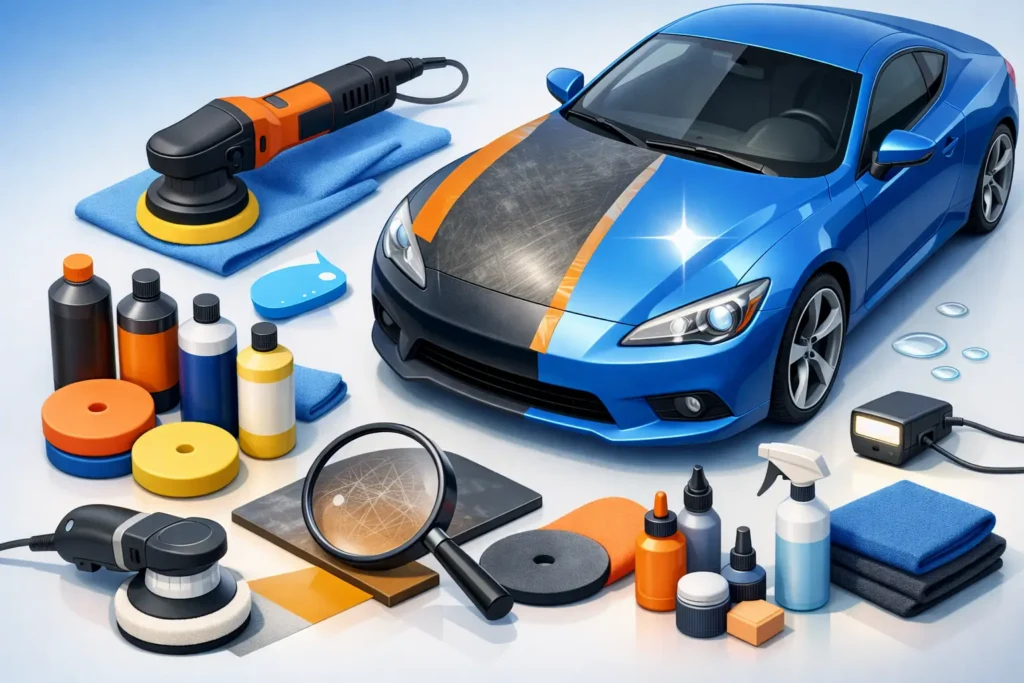
After prep, the paint is inspected under strong lighting. This step helps identify the type and severity of defects and reveals whether the finish has previous polishing damage, sanding marks, or repainted sections. From there, a test spot is performed. This is one of the most important parts of professional correction because it determines the least aggressive method that will produce the desired result.
A machine polisher, pad, and compound or polish are then used to refine the surface. A one-step correction usually aims for a major visual improvement with less time and less paint removal. A two-step correction generally includes a heavier cutting stage followed by a refining polish to maximize gloss and clarity. On some vehicles, especially darker colors, that second step makes a dramatic difference.
Once correction is complete, the paint should be protected. Bare, freshly corrected paint is vulnerable. A ceramic coating, sealant, or wax helps preserve the finish and makes maintenance easier. For owners who want long-term protection and easier washing, ceramic coating is often the most practical next step.
One-step vs. two-step correction
This is where expectations need to be realistic. Not every vehicle needs a multi-stage correction, and not every owner wants to pay for one. A one-step correction is often the right fit for daily drivers with moderate swirls and general dullness. It can deliver a strong improvement in gloss and remove a meaningful percentage of defects while keeping the process efficient.
A two-step correction is better suited for vehicles with heavier defects, darker paint, or owners who want a more refined finish. It typically removes more defects and leaves a sharper, deeper look. The trade-off is time, cost, and a more involved process.
There are also cases where spot correction makes sense. If one door, hood, or trunk lid has more noticeable damage than the rest of the vehicle, a targeted approach may be more sensible than full correction. The right service is not always the biggest service. It is the one that fits the paint, the budget, and the end goal.
What paint correction cannot do
Paint correction is powerful, but it is not magic. If a scratch has gone through the clear coat into the color layer, polishing will not remove it. Rock chips, peeling clear coat, and paint failure require refinishing, not detailing. Very deep etching may improve without disappearing completely.
This is also why honest consultations matter. A trustworthy detailer should explain what is safely correctable, what can only be improved, and what falls outside the scope of correction. Overselling perfect results helps nobody.
Why DIY often falls short
There is nothing wrong with car owners wanting to care for their own vehicles, but paint correction has a steeper learning curve than basic detailing. The challenge is not just using a machine polisher. It is knowing pad and product combinations, understanding heat and pressure, reading paint behavior, and avoiding unnecessary removal of clear coat.
DIY attempts often create haze, uneven correction, or more visible trails than the original defects. In some cases, the owner uses an overly aggressive combo chasing deeper scratches that were never safe to remove in the first place. On softer paint systems, even towel choice after polishing can reintroduce marring.
For high-value vehicles, black paint, newer luxury finishes, or owners who simply want the job done right the first time, professional correction is usually the better value. The result is not just a shinier vehicle. It is a more consistent finish, safer process, and clearer plan for protecting the paint afterward.
When professional service is worth it
If your vehicle looks gray in the sun instead of glossy, if automatic washes have left visible swirls, or if you are preparing for a sale, ceramic coating, or seasonal refresh, paint correction is worth considering. It is especially valuable before applying long-term protection. Coating over uncorrected paint locks in the defects you can already see.
For busy owners, convenience matters too. A premium service experience should include clear communication, realistic expectations, and a process built around care rather than volume. That is a big part of why customers choose certified professionals. At SPS Autocare, that standard means treating paint correction as craftsmanship, not a quick add-on.
How to keep corrected paint looking better longer
The hard part is not always the correction itself. It is maintaining the finish afterward. Poor wash habits can reintroduce swirls surprisingly fast. Safer hand washing, clean microfiber towels, quality drying methods, and regular protection make a real difference.
If you invest in correction, your maintenance plan should match. That may mean routine detailing, a protective coating, or simply avoiding brush-style automatic washes. The better the aftercare, the longer the results hold up.
Paint correction is one of the most noticeable upgrades you can make to a vehicle because it changes how the paint reflects light, not just how clean it is on the surface. When done properly, it brings back depth, sharpness, and the kind of finish that makes the whole vehicle feel newer. If your paint has lost that clarity, the right correction plan can bring it back without guessing, overselling, or cutting corners.