That new-car shine is exactly why so many owners ask, should new cars get ceramic coating right away, or is it something that can wait? The short answer is yes, often it makes sense – but not for every driver, not at every price point, and not as a substitute for proper care. A new vehicle gives you the best possible starting point for long-term paint protection, which is why timing matters.
If you just bought a car in New England, the question is not only about gloss. It is about road salt, sand, bug splatter, tree sap, UV exposure, and the steady wear that starts long before a vehicle looks “old.” Ceramic coating can help preserve that fresh finish, make routine washing easier, and keep the paint looking cleaner longer. But it works best when expectations are realistic.
Should New Cars Get Ceramic Coating Right Away?
In many cases, yes. New cars are the easiest to protect because the paint is usually in better condition than an older vehicle’s finish. That does not mean a brand-new car is flawless. It is common for new vehicles to arrive with light wash marring, dealership prep marks, transport fallout, or minor imperfections from sitting on a lot.
That is one reason professional prep matters. Applying a coating over contaminated or lightly scratched paint locks those issues underneath. A proper ceramic coating service should include paint assessment, surface prep, decontamination, and, when needed, light polishing before the coating is installed. On a new car, this process is typically more straightforward than a full correction on an older one, which can make it a smart time to protect the finish.
If your goal is to keep the vehicle looking closer to new for longer, earlier is better. Waiting a year or two usually means more swirling, more contamination, and more correction work before protection can be applied.
What Ceramic Coating Actually Does
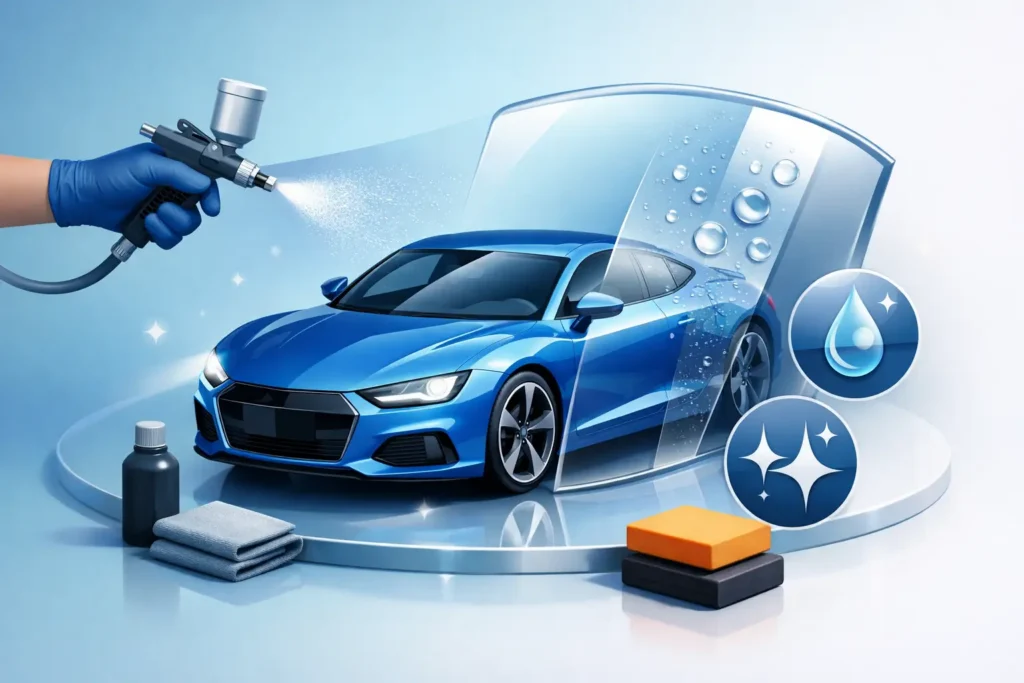
Ceramic coating is not a magic shield, and it is not the same as paint protection film. It is a durable protective layer that bonds to the vehicle’s exterior surfaces. Once cured, it creates a slick, hydrophobic finish that helps water bead, reduces how strongly grime sticks, and adds depth and gloss to the paint.
For most owners, the biggest day-to-day benefit is easier maintenance. Dirt does not bond as aggressively, washing becomes simpler, and drying is faster. That may sound like a small advantage, but over time it changes how the vehicle ages. Cars that are easier to maintain are more likely to stay clean, and cars that stay clean usually hold their appearance better.
A quality coating also offers meaningful resistance to UV damage, chemical staining, bird droppings, bug residue, and road film. It does not make your paint invincible. It does give it a better chance against the kind of exposure that New England drivers see every week.
What It Does Not Do
This is where honest guidance matters. Ceramic coating will not stop rock chips. It will not prevent every scratch. It will not let you skip washing altogether. If someone is treating it as a cure-all, they are overselling it.
Drivers with highway commutes or frequent construction-zone travel should understand that impact damage is a separate issue. If chip protection is your top concern, paint protection film is the better solution for high-impact areas like the front bumper, hood edge, mirrors, and fenders. In many cases, the best setup is film where the abuse happens most and ceramic coating over the rest for easier maintenance and enhanced appearance.
It is also worth saying that coatings still need proper care. Automatic brush washes can still create swirl marks. Harsh chemicals can shorten performance. Good protection and good maintenance work together.
Why New Cars Are Strong Candidates
A new vehicle is a strong candidate for coating because the value equation is better at the beginning. You are protecting a finish before daily wear starts stacking up. That usually means less correction, better cosmetic results, and a cleaner ownership experience from the start.
There is also the resale side. Buyers notice paint condition quickly, even if they cannot explain exactly what they are seeing. A vehicle with better gloss, fewer defects, and cleaner trim simply presents better. If you lease, appearance still matters. Excess wear, staining, and neglected surfaces can show up at turn-in.
For luxury vehicles and high-end trims, the argument is even stronger. When you invest more in a vehicle, preserving the finish tends to make practical sense, not just cosmetic sense. The same applies to dark-colored cars, which show wash marring, water spots, and neglect faster than lighter colors.
When It May Not Be Worth It
There are cases where ceramic coating may not be the right move, at least not immediately. If you trade vehicles every year or two and are not concerned with maintaining the finish, you may not see the full value. If the car is a basic commuter that lives outside, goes through harsh tunnel washes weekly, and gets minimal upkeep, a premium long-term coating may be more protection than your ownership habits support.
Budget matters too. A professionally installed coating is a real service, not a quick spray-on add-on. The value comes from the prep work, product quality, installation process, and aftercare guidance. If the only option on the table is a rushed, low-cost application with little prep, it may be better to wait and have it done properly.
The right question is not only, should new cars get ceramic coating? It is also, will you maintain the vehicle in a way that lets the coating perform the way it should?
Dealership Coatings vs Professional Detailing Services
This is where many owners get tripped up. Dealerships often offer paint protection packages during the purchase process because it sounds convenient. Sometimes those packages are legitimate. Sometimes they are overpriced, lightly explained, and applied with minimal correction or prep.
A proper coating service should be transparent about what is being installed, how long it is expected to last, what prep is included, and what maintenance is required afterward. If those details are vague, that is a concern. The coating itself matters, but installation standards matter just as much.
A certified, insured detailing professional will usually take a more paint-focused approach. That means evaluating the actual condition of the finish, correcting what needs correcting, and matching the coating package to how the owner uses the vehicle. For customers who care about results, that difference is significant.
How to Decide if It Makes Sense for You
If you want easier maintenance, stronger gloss, and better long-term appearance, ceramic coating is usually a smart investment on a new car. If you care about keeping your vehicle looking well-kept through New England weather, it is even more compelling.
If your main concern is physical impact damage, pair coating with paint protection film instead of expecting one product to do both jobs. If you know you are unlikely to wash the car properly or follow any aftercare, then a simpler protection option may be more realistic.
The best choice depends on how long you plan to keep the car, where you drive, how you wash it, and how much you value appearance over time. For many owners, especially busy professionals and families who want their vehicles to stay sharp without constant effort, coating a new car early is the cleanest way to stay ahead of wear.
At SPS Autocare, that decision is approached the same way any premium service should be – with clear recommendations, proper prep, and protection that fits how the vehicle is actually used.
A new car will never be newer than it is today. If you want to preserve that advantage, the best time to protect it is usually before the miles, weather, and wash marks start telling a different story.