Coffee in the console, salt tracked into the carpets, pet hair woven into the rear seats – most interiors do not get dirty all at once. They wear down slowly, and then one day the whole cabin feels tired. A good guide to interior detailing services should make one thing clear right away: this is not the same as a quick vacuum and wipe-down. Professional interior detailing is a deeper process designed to clean, restore, and protect the surfaces you touch every time you drive.
For many vehicle owners, the real question is not whether the interior needs attention. It is how much service makes sense for the way the car is used. A commuter SUV with kids and sports gear needs something different than a weekend luxury sedan. The right detail starts with the condition of the vehicle, the materials inside it, and whether your goal is maintenance, stain removal, odor treatment, or a full reset.
What interior detailing services actually include
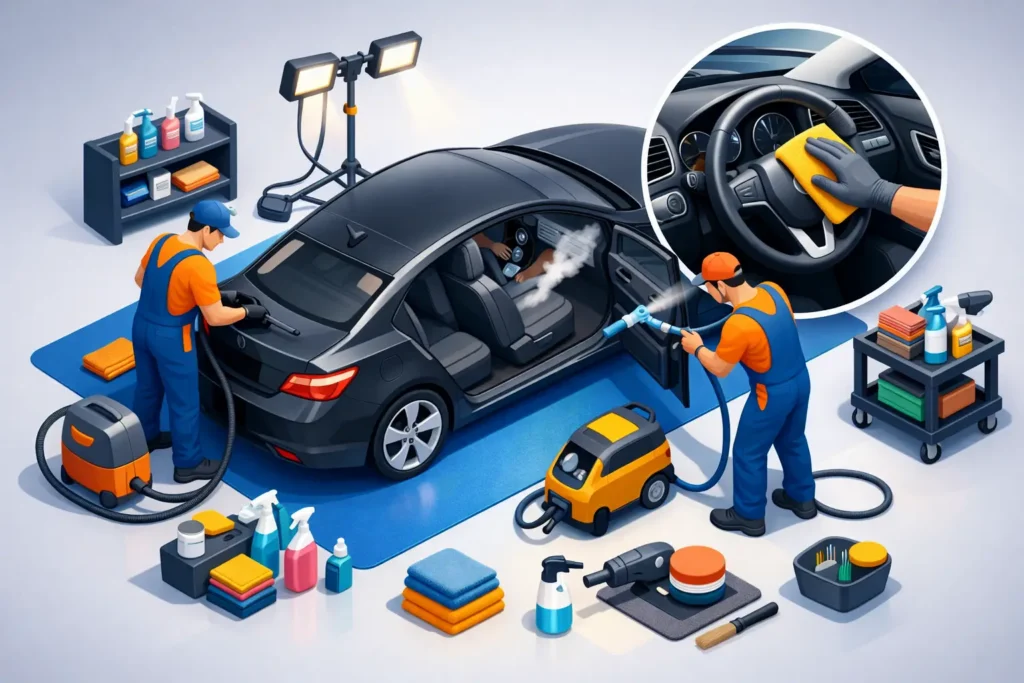
Interior detailing services vary by provider, but a proper service usually goes far beyond surface cleaning. At a minimum, the process should include a thorough vacuum of carpets, mats, seats, trunk space, and tight crevices. Dust and debris collect in places most owners cannot easily reach, especially around seat rails, vents, cup holders, and between console trim.
From there, interior detailing typically moves into material-specific cleaning. Cloth seats may need shampooing or hot-water extraction, while leather seats require controlled cleaning with products that remove body oils and grime without drying the hide. Door panels, dashboards, steering wheels, and center consoles should be cleaned with the right chemistry for soft-touch plastics, vinyl, wood trim, piano black surfaces, and screens.
Windows and mirrors are also part of the service, but quality matters here too. Interior glass should be cleaned without streaking, haze, or overspray left on adjacent trim. In higher-end services, detailers may also clean headliners carefully, treat floor mats, neutralize odors, and apply protectants that help reduce future wear from UV exposure and daily use.
A guide to interior detailing services by vehicle condition
The biggest mistake people make is booking by package name instead of condition. Terms like mini detail, full detail, or deep clean can mean very different things from one shop to the next. It is more useful to think about interior detailing in three levels.
A maintenance interior detail is best for vehicles that are already in decent shape. Maybe there is dust, light dirt, and normal use, but no major staining or odor. This type of service helps keep a newer or regularly serviced vehicle looking sharp without overpaying for restoration work it does not need.
A corrective interior detail fits vehicles with visible buildup. This is where you see stained seats, dirty carpets, sticky residue in touchpoints, salt marks, pet hair, or neglected trim. These jobs take more time because the goal is not just cleaning what is easy to reach. It is correcting the signs of use that have built up over months or years.
A restorative interior detail is for the toughest interiors. Think smoke odor, heavy staining, embedded debris, spills that have dried into carpet padding, or biological messes that need special handling. In these cases, the result depends on the severity of the problem and the material involved. Some stains can be removed fully. Others can only be improved. A trustworthy detailer will explain that upfront.
Why interior detailing is about more than appearance
A clean interior feels better, but there is also a practical reason to stay ahead of contamination. Dirt and oils break down surfaces over time. Leather becomes dull and stressed. Fabric holds odor. Plastic trim can become discolored or sticky if residue is left in place too long. Carpets packed with grit wear faster because abrasive particles grind into the fibers every time someone gets in and out.
There is also resale value to consider. Buyers notice interiors immediately. They notice shiny steering wheels from hand oils, stained seats, smells that suggest neglect, and vents packed with dust. A properly detailed cabin signals that the vehicle has been cared for, and that can support stronger value when it is time to sell or trade in.
For families and professionals, interior detailing also improves the ownership experience. If you spend hours each week commuting, transporting clients, or driving kids to school and practice, the cabin is not a minor part of the vehicle. It is the environment you live in on the road.
How long interior detailing services usually take
Time depends on size, condition, and the level of correction needed. A well-kept sedan getting maintenance service may take a few hours. A larger SUV with pet hair, stains, and heavy soil can take most of a day. Severe odor treatment or extraction-heavy work may require even longer, especially if drying time is part of the process.
That matters when comparing quotes. If one provider promises a full interior detail in a very short window, it is fair to ask what is actually included. Thorough work takes time. Rushed interiors often look better at first glance but still have debris in cracks, residue on trim, and moisture left behind in fabrics.
Mobile service can also affect timing slightly. A skilled mobile detailer can do excellent work, but the setup, weather, and access to power or water may influence the workflow. Garage-based service can be more controlled for advanced corrections or sensitive materials. The best option depends on the vehicle and the service needed.
What to ask before booking
Not every detailing provider works to the same standard. If you are comparing options, ask how they treat different interior materials, whether stain and odor removal are included or quoted separately, and what level of result is realistic for your vehicle’s condition.
It also makes sense to ask whether the company is insured, trained, and experienced with premium interiors. Modern cabins can include delicate matte trim, perforated leather, suede-like materials, touchscreens, and specialty finishes that are easy to damage with the wrong tools or products. Certification does not replace skill, but it does show a commitment to professional standards. That matters in a crowded market where anyone can advertise detailing.
A strong provider should also be transparent about limitations. Deep-set dye transfer, old spills, and certain odors are not always removable in one visit. Honest expectations are a sign of professionalism, not a drawback.
When protection should be part of the service
Cleaning restores an interior. Protection helps keep it that way. Depending on the surfaces, interior protection may include conditioner for leather, UV protection for plastic and vinyl, or specialized coatings for fabric and upholstery. These products can make regular upkeep easier and reduce how quickly the cabin shows wear.
That said, protection is not one-size-fits-all. Some owners want a natural, factory-matte finish with no added shine. Others want stronger stain resistance for family vehicles or work trucks. A professional should match the finish and protection level to the vehicle and your preferences, not apply the same dressing to every interior.
For drivers who want long-term results, a maintenance plan often makes more sense than waiting until the vehicle feels out of control. Regular service reduces the need for aggressive correction later and helps preserve the value of the materials over time. That is especially true in New England, where mud, salt, sand, and wet gear can make interiors deteriorate faster than people expect.
Choosing the right guide to interior detailing services for your needs
The best guide to interior detailing services is not the one that promises the most. It is the one that helps you choose the right level of care for your vehicle, your schedule, and your standards. Some owners need a seasonal refresh. Others need concierge-level service that keeps the cabin consistently sharp with minimal disruption to their day.
If convenience matters, mobile detailing can be a strong fit. If the job is more specialized, an in-shop environment may be the better choice. If your vehicle is newer, preventive care may be enough. If it has been through years of commuting, kids, pets, or winter weather, a deeper correction is probably worth it.
At SPS Autocare, that conversation starts with the condition of the vehicle and the result the owner wants, not a one-size-fits-all script. That approach tends to lead to better outcomes and fewer surprises.
A well-detailed interior does more than look clean for a few days. It makes the vehicle feel cared for again, which is often exactly what owners notice the moment they open the door.