A few years ago, mobile detailing was often seen as the convenient option – good for a wash and vacuum when life got busy. That perception is changing fast. The future of mobile detailing is not just about showing up at your home or office with water and tools. It is about delivering professional-grade correction, protection, maintenance, and customer care with less disruption to your schedule.
For vehicle owners, that shift matters. If you are protecting a daily driver, preserving a luxury vehicle, or trying to keep a family SUV from looking worn before its time, the next phase of mobile detailing will give you more access to skilled care without giving up quality. The real question is not whether mobile detailing will grow. It is what kind of service will separate true professionals from everyone else.
The future of mobile detailing is moving upscale
The biggest change ahead is simple. Mobile detailing is becoming more specialized.
Customers are no longer satisfied with a quick rinse and a shiny tire dressing that looks good for a day. They want real interior cleaning, paint decontamination, polishing, ceramic protection, and maintenance plans that preserve the vehicle over time. That demand is pushing serious detailers to operate with higher standards, better equipment, stronger processes, and more training.
This is especially true in regions where weather is hard on vehicles. In New England, road salt, sand, moisture, pollen, and long winters create wear that cannot be solved by basic wash services alone. A premium mobile service has to do more than clean. It has to help prevent long-term damage and maintain value.
That means the future belongs to detailers who understand surfaces, chemistry, safe wash methods, stain removal, paint behavior, and protective products – not just those who can book quickly on social media.
Convenience will matter more, but so will trust
Convenience is still a major reason customers choose mobile service, but convenience by itself is no longer enough. As mobile detailing becomes more common, trust becomes the deciding factor.
People are handing over vehicles that may be worth tens of thousands of dollars or more. They want to know who is touching the paint, cleaning delicate interior materials, and applying long-term protection. They also want clear expectations. How long will it take? What results are realistic? What is included? What happens if the vehicle needs more correction than expected?
That is where the market is heading. The strongest mobile detailers will win not because they are the cheapest or loudest, but because they are transparent, insured, trained, and consistent.
Professional certifications and documented standards will likely carry more weight over time. For customers, that creates a better buying experience. You are less likely to guess. You are more likely to get a service plan that fits the actual condition of your vehicle.
Better equipment will close the gap between mobile and shop service
One reason mobile detailing used to be seen as limited was equipment. That gap is shrinking.
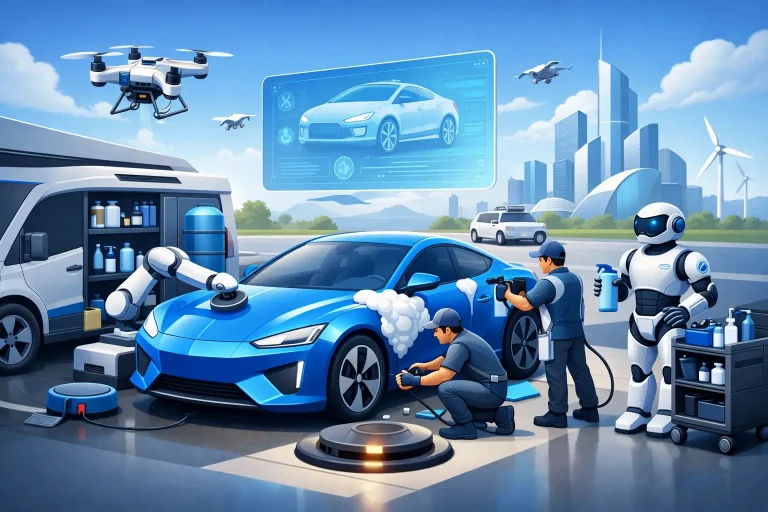
Portable power systems, compact extractors, better steam units, more efficient lighting, and improved water solutions are making it easier for mobile professionals to deliver higher-end work on site. Some services will always make more sense in a controlled shop environment, especially when conditions need to be tightly managed. But many results that once seemed shop-only can now be handled far more effectively in a mobile setup than most people realize.
The trade-off is that mobile work still depends on environment. Temperature, wind, access, shade, and surface conditions all affect what can be done outside. A quality detailer will not pretend otherwise. Sometimes the right answer is mobile maintenance at your location. Sometimes the right answer is bringing the vehicle into a garage-based space for a more controlled process.
That hybrid model is likely to become more common because it gives customers flexibility without lowering standards.
Ceramic coatings and long-term protection will keep growing
If there is one area that points clearly to the future of mobile detailing, it is protection.
More vehicle owners now understand that detailing is not only cosmetic. It is preventative. Ceramic coatings, interior protection, trim restoration, and maintenance-focused service plans all support the same goal – keeping the vehicle in better condition for longer.
This matters whether you drive a high-end performance car or a three-row SUV full of kids and sports gear. Protection reduces the rate of visible wear. It can make routine cleaning easier. It can help preserve the finish and support resale value. It also shifts detailing from an occasional expense to an ongoing care strategy.
That said, not every vehicle needs the same level of protection. A garage-kept weekend car and a commuter vehicle parked outside through winter will have different needs. A good detailer will guide customers based on usage, storage, mileage, and budget instead of pushing the most expensive option every time.
Customers will expect maintenance, not one-time service
Another major shift is how people think about vehicle care. The one-time detail will always exist, but the future points toward recurring maintenance.
That is good for customers because vehicles stay cleaner, protected surfaces last longer, and small issues get addressed before they become expensive ones. It is also more practical. Once a vehicle reaches a strong baseline condition, maintaining it regularly is usually easier and more cost-effective than letting it decline and starting over every few months.
For busy professionals and families, this model makes even more sense. Instead of trying to find a full day for major cleanup after months of buildup, they can stay ahead of the wear with a predictable schedule. The result is less stress, more consistent appearance, and better long-term value.
The best companies will build these plans around real usage patterns. A vehicle with children, pets, highway commuting, and winter exposure needs a different cadence than a second car driven lightly.
Technology will improve the customer experience behind the scenes
The future of mobile detailing is not only about tools and products. It is also about communication.
Customers increasingly expect a service experience that feels organized and professional from start to finish. That includes easy scheduling, clear package options, digital confirmations, arrival updates, before-and-after photos, service notes, and maintenance reminders.
These details may seem small, but they shape trust. When a company communicates well, customers feel informed rather than sold to. They know what is happening with their vehicle and what to do next to protect the result.
For a premium detailing business, technology should support the experience, not replace human judgment. Automated booking is helpful. So is digital documentation. But customers still want a real recommendation from someone who understands paint condition, interior wear, and product performance.
Premium results will depend on process, not marketing
As the industry grows, more companies will call themselves premium. Not all of them will be.
That is another reason the market will keep separating. Customers are getting better at spotting the difference between polished marketing and polished workmanship. A professional process shows up in the little things – safe wash methods, realistic time estimates, proper prep before protection, careful interior work, and honest conversations about what can and cannot be corrected.
This is where a company like SPS Auto Detailing stands out. In a crowded market, credentials, training, insurance, and methodical workmanship are not extras. They are part of what protects the customer.
The future will reward businesses that treat detailing as a skilled trade rather than a side hustle. That means stronger inspection routines, better documentation, and service recommendations based on vehicle condition instead of quick upsells.
Sustainability will matter, but practicality still wins
Customers are paying more attention to water use, chemical choice, and environmental impact. That will influence the future of mobile detailing, but not always in the simplistic way people expect.
Water-saving techniques and efficient equipment will continue to improve. So will products designed to be effective with less waste. But sustainability in detailing also means extending the life of surfaces so they do not deteriorate prematurely. Proper cleaning and protection can reduce avoidable wear on paint, leather, trim, carpeting, and other materials.
The practical reality is that environmental choices have to work in real conditions. In harsh climates, products still need to perform. Cleaning still needs to be thorough. The best path forward is not cutting corners in the name of sustainability. It is choosing smarter methods that protect both the vehicle and the process.
What customers should look for next
As mobile detailing continues to evolve, customers should expect more than convenience and a glossy finish. Look for businesses that explain their process clearly, offer realistic recommendations, and understand the difference between maintenance cleaning and corrective work.
Ask how they handle varying weather and site conditions. Ask what training or certifications back their service. Ask how they protect delicate materials and how they approach long-term care, not just a one-day transformation. Those answers tell you a lot.
The future of mobile detailing will be shaped by companies that combine flexibility with craftsmanship. For customers, that is a good thing. You should not have to choose between convenience and quality anymore. The right provider will bring both – and make caring for your vehicle feel less like another task on your calendar and more like a smart way to protect something you use every day.