
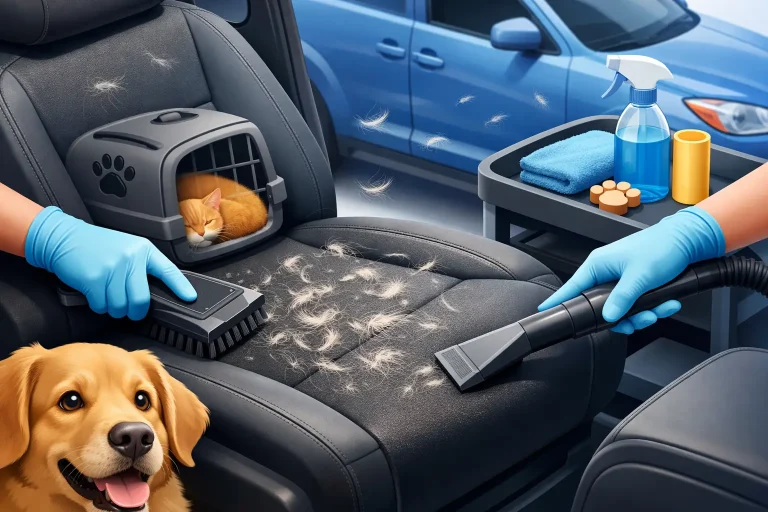
You notice it when the sunlight hits the seats just right. What looked like a few loose strands from the family dog is now woven into the carpet, caught in the trunk liner, and clinging to every fabric surface in the cabin. If you have been asking, can detailing remove pet hair, the short answer is yes – but the real answer depends on how deeply the hair is embedded, what materials are in the vehicle, and how thorough the process is.
Pet hair is one of the most frustrating interior issues for vehicle owners because it does not behave like ordinary dust or debris. A quick vacuum might pick up the easy stuff, but the hair that matters most is usually anchored into carpet fibers, wrapped into seat fabric, or packed into tight seams. That is where professional detailing makes a meaningful difference.
Can detailing remove pet hair completely?
In many cases, detailing can remove the vast majority of pet hair and dramatically improve the interior. On some vehicles, especially those with cloth seats, textured cargo liners, or heavily used family interiors, complete removal may not mean every single strand is gone forever. It means the visible buildup, embedded mats of hair, and hard-to-reach accumulation are addressed with the right equipment and technique.
That distinction matters. Honest detailing is about results, not overpromising. Pet hair can be surprisingly stubborn, especially when it has been ground into the same surfaces over months or years. Static, humidity, fabric type, and even the breed of pet all affect how easy it is to remove.
A professional detailer approaches this as a labor-intensive correction process, not just a vacuuming job. The goal is to restore the interior to a clean, comfortable, well-maintained condition without damaging delicate surfaces.
Why pet hair is so hard to remove
Pet hair tends to act like a hook. It catches in woven seat fabric, binds itself into carpet loops, and settles into corners where standard vacuum attachments do very little. Short, stiff hair from some breeds can be even worse than long hair because it drives deeper into the material.
There is also the issue of friction. Every time someone sits down, slides across a seat, or loads cargo into the back of an SUV, the hair gets pushed farther into the fibers. By the time most owners decide they are ready for professional help, the problem is no longer surface-level.
Moisture and static can make things worse. In New England, where vehicles often deal with seasonal moisture, slush, and changing temperatures, hair can cling even more aggressively to interior materials. That is one reason pet hair removal often takes more than one tool or one pass.
How professional detailing removes pet hair
Professional pet hair removal usually starts with a full assessment of the interior. Not every surface should be handled the same way. Carpet, cloth, leather, rubber mats, headliners, and cargo areas each require a different level of care.
The process often begins with compressed air, specialized brushes, rubber tools, and strong vacuum systems working together. Air helps lift hair from seams and crevices. Brushes loosen hair that has become trapped in fabric. Rubber tools create friction that gathers hair into clumps, making extraction more effective. Then a commercial-grade vacuum removes what has been released.
On more severe jobs, the same area may need multiple passes from different angles. That is normal. Pet hair removal is one of the most time-consuming parts of interior detailing because success comes from patience and technique, not force.
If the vehicle also has pet dander, stains, or odor issues, those are often treated separately. Removing the hair is one part of the job. Restoring the overall interior environment is another. A quality detail addresses the cabin as a whole, not just the most visible symptom.
What affects the results
If you are wondering whether your vehicle is a good candidate, a few factors make a big difference.
The first is surface type. Leather and coated interior panels are usually easier to clean because hair sits more on top of the material. Cloth seats and carpet are more challenging because the fibers trap and hold hair.
The second is how long the hair has been there. Fresh hair is easier to remove than hair that has been repeatedly pressed into the same spots over time. Vehicles used daily by dogs, especially in rear seating areas and cargo spaces, often need the most labor.
The third is volume. A little shedding is one thing. A vehicle that regularly transports multiple pets or one heavy-shedding breed is another. When the interior has a thick, widespread buildup, removal takes longer and may be priced accordingly.
There is also the condition of the interior itself. Worn fabric, damaged carpet, and neglected surfaces can make the work more difficult. In those cases, a professional detail can still improve the interior significantly, but expectations should be realistic.
Can detailing remove pet hair from every area?
Most of it, yes. Seats, carpets, floor mats, trunk liners, under-seat areas, seat rails, and side panels can all be treated. Tight seams, Velcro-like cargo materials, and certain upholstery blends tend to be the most stubborn areas.
Headliners need special caution. Hair can collect there, but aggressive scrubbing is not appropriate because headliner material is more delicate than standard upholstery. A trained detailer knows how to clean those areas carefully without causing damage.
Vents, cracks, and trim edges also matter. Hair often migrates into places owners do not notice until the rest of the interior is clean. Attention to those details is what separates basic cleaning from true interior detailing.
When DIY stops being worth it
Many vehicle owners start with lint rollers, household vacuums, or pet hair brushes. Those tools can help with light maintenance, especially if you clean often. But once hair becomes embedded, DIY efforts usually become frustrating fast.
The problem is not effort. It is efficiency. A household vacuum typically does not have the suction, attachments, or airflow needed to pull out deeply trapped hair. You can spend hours working on one seat and still leave behind a noticeable amount.
Professional detailing becomes worth it when the hair is widespread, when you are preparing the vehicle for resale, when odors are starting to linger, or when you simply want the interior reset properly. For busy families and professionals, paying for the right process once is often more practical than fighting the same problem every weekend.
What to expect from a premium detailing service
A premium service should be clear about what is included, how long the job may take, and whether severe pet hair removal adds labor time. Transparency matters here because pet hair jobs vary widely from vehicle to vehicle.
You should also expect care, not shortcuts. Aggressive scraping or improper tools can damage fabric or trim. A professional detailer balances thoroughness with material-safe methods, especially in luxury vehicles or newer interiors where preserving condition matters just as much as getting the hair out.
This is where certifications, standards, and experience make a difference. A trained team understands how to inspect materials, choose the right approach, and communicate honestly about expected results. That is a better experience than a rushed interior cleaning that leaves the hard part untouched.
How to keep pet hair from taking over again
Once the interior has been properly detailed, maintenance gets much easier. Seat covers, cargo liners, and regular light vacuuming can slow the buildup. Brushing your pet before rides also helps more than most people expect.
If your dog rides in the same spot every time, protecting that zone can save a lot of cleanup later. Routine maintenance details are especially useful for pet owners because they keep hair, dander, and grime from becoming a major correction job again.
For clients who use their vehicle hard but still want it to feel clean and cared for, that ongoing approach usually delivers the best value. It protects comfort, appearance, and long-term condition without letting small messes turn into a bigger project.
So, can detailing remove pet hair well enough to matter?
Absolutely. In most cases, professional detailing can remove a substantial amount of pet hair and restore the interior far beyond what basic cleaning can accomplish. The exact result depends on the materials, severity, and time involved, but the improvement is often dramatic.
For vehicle owners who care about cleanliness, comfort, resale value, and overall pride in their car, pet hair removal is not a cosmetic extra. It is part of bringing the interior back to a standard that feels right. At SPS Auto Detailing, that means treating the problem with the same precision and care as any other interior restoration task.
If your vehicle has reached the point where every seat, mat, and cargo panel seems to hold onto fur, the good news is simple: the right detailing process can do far more than most people think, and a clean interior makes every drive feel better.