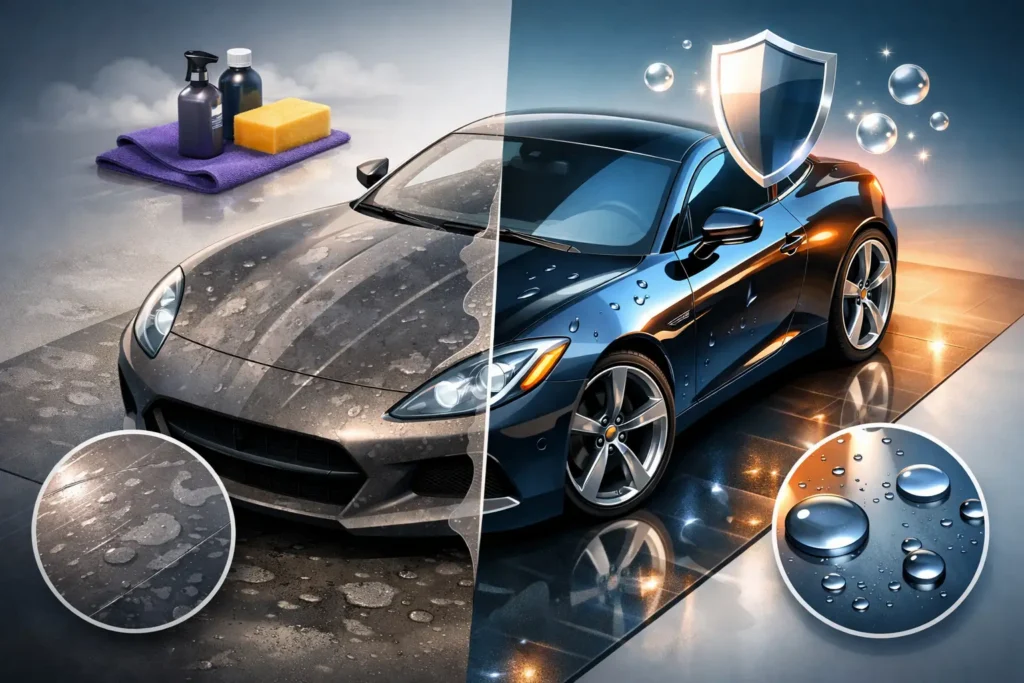
A freshly coated vehicle does not just look cleaner. The difference in ceramic coating before and after is usually most obvious in the way light moves across the paint – sharper reflections, deeper gloss, and a surface that feels noticeably slicker to the touch. But the real value is not just what you see the day of service. It is what stays easier to maintain in the weeks and months that follow.
For many vehicle owners, the biggest question is simple: does ceramic coating actually make a meaningful difference, or does it just make a car look good for a few days? The honest answer is that it depends on the condition of the vehicle before the coating ever touches the paint. A properly applied coating can dramatically improve protection and appearance, but the best results come from preparation, correction, and realistic expectations.
What ceramic coating before and after really shows
When people search for ceramic coating before and after, they are usually looking for dramatic visual proof. They want to see a dull vehicle become glossy, faded paint look richer, and water bead up like it does in promotional videos. Those improvements are real, but they are often misunderstood.
Ceramic coating is not a paint correction product. It does not remove swirl marks, deeper scratches, oxidation, or water spot etching on its own. If those defects are still in the paint when the coating is installed, the coating will preserve them right along with the shine. That is why professional prep matters so much.
The true before-and-after transformation usually comes from a combination of decontamination, polishing, and coating. First the paint is washed properly, stripped of built-up contamination, and evaluated under strong lighting. Then defects are corrected as needed. Only after the paint is clean and refined does the coating get applied to lock in that improved finish.
The visual difference after ceramic coating
On a vehicle that has been prepared correctly, the after effect is easy to recognize. Paint typically looks darker, clearer, and more reflective. Metallic finishes often appear more defined, while solid colors gain a richer, wetter look.
That said, the result can vary by paint color, age, and overall condition. Black vehicles often show the most dramatic improvement because increased gloss and corrected paint are immediately visible. White and silver vehicles may show a subtler difference in photos, but in person they often look brighter, cleaner, and crisper.
Windows, trim, wheels, and other coated surfaces can also benefit. Glass tends to shed water more effectively. Trim can maintain a more even finish. Wheels become easier to clean because brake dust and grime are less likely to bond as aggressively to the surface.
Gloss is only part of the story
The surface feel changes too. A professionally coated vehicle usually feels smoother because the paint has been decontaminated and refined before application. Dirt also tends to release more easily during routine washes.
That does not mean the car stays spotless on its own. A coated vehicle still gets dirty, especially in New England where road salt, pollen, rain, mud, and winter grime can build up quickly. The difference is that the contamination is generally easier to remove, and the finish is better equipped to resist environmental exposure.
What changes after the first few weeks
The best ceramic coating before and after comparison is not always taken on delivery day. It is often seen a month or two later, when one vehicle has a quality coating and proper maintenance, and another has been left unprotected.
Over time, coated paint usually holds its gloss longer and washes up more easily. Water behavior remains noticeably better, and routine maintenance takes less effort. That can be especially valuable for busy professionals, families, and anyone who wants their vehicle to stay presentable without spending every weekend cleaning it.
A non-coated vehicle, by comparison, often starts to show that familiar decline sooner. The finish loses some crispness, contaminants bond more stubbornly, and wash-induced wear accumulates faster if care is inconsistent.
This is where ceramic coating earns its reputation. It is not magic, but it does create a more resilient, easier-to-maintain surface when installed correctly.
What ceramic coating does not fix
A trustworthy detailer should be clear about limits. Ceramic coating does not make your vehicle scratch-proof. It does not stop rock chips. It does not replace paint protection film on high-impact areas. And it does not excuse poor washing habits.
This is one of the most common misunderstandings in the market. Someone sees impressive ceramic coating before and after photos and assumes the coating itself corrected years of wear. In reality, the improvement usually came from the polishing stage.
If your vehicle has heavy swirling, etched water spots, oxidation, or hazy paint, those issues need to be addressed before the coating is installed. Otherwise, the coating may add gloss, but it will not create the clean, sharp finish most people expect.
Why prep work matters so much
Surface preparation is what separates average results from premium ones. Professional-grade coatings bond best to paint that is clean, oil-free, and properly corrected. Skipping steps to save time can compromise durability, appearance, or both.
That is one reason certified, insured detailing providers matter. Coating installation is not just about applying a product. It is about understanding paint systems, using proper lighting, controlling the environment, and matching the level of correction to the client’s goals and budget.
For some vehicles, a one-step polish may be enough to create a major improvement. For others, multi-stage correction is the right path. There is no one-size-fits-all answer, and a quality provider should explain that clearly.
How long the after results last
Durability depends on the product, the prep, the environment, and how the vehicle is maintained afterward. A professionally installed ceramic coating can last years, but only if the finish is cared for properly.
Frequent tunnel washes with harsh brushes can shorten the life of the coating and reintroduce defects into the paint. Letting salt, sap, bird droppings, or hard water deposits sit for too long can also reduce performance. By contrast, regular safe washing and periodic inspections help preserve both the coating and the corrected finish underneath it.
This is why maintenance matters as much as installation. The after in ceramic coating before and after is not a one-time photo. It is an ongoing condition. If you want the vehicle to keep that gloss, slickness, and easier-cleaning behavior, the coating needs support through proper care.
Is ceramic coating worth it for everyday drivers?
Yes, for many people it is – especially if you plan to keep the vehicle for several years or care about appearance and resale value. Ceramic coating is not only for exotics and weekend cars. Daily drivers often benefit the most because they are exposed to weather, road film, bugs, salt, and UV damage on a regular basis.
For an everyday vehicle, the value often comes down to reduced maintenance difficulty and better long-term appearance. Washing takes less effort. The paint holds up better. The vehicle stays closer to that freshly detailed look between appointments.
For higher-end vehicles, the equation can be even more compelling. If you have invested heavily in a luxury SUV, sports car, or premium truck, preserving the finish makes sense. A coating helps protect that investment, especially when paired with proper correction and a maintenance plan.
What to expect from a professional service
A professional ceramic coating service should feel structured, transparent, and tailored to the vehicle. That usually includes a condition assessment, wash and decontamination, paint correction as needed, coating application, cure time, and aftercare guidance.
You should also expect realistic communication. A reputable provider will explain what level of improvement is possible, what defects can remain, and how the vehicle should be maintained after delivery. If someone promises perfection without inspecting the paint, that is a reason to ask more questions.
For customers who value convenience, this process should also fit into real life. That may mean mobile consultations, garage-based installation for controlled conditions, service updates during the appointment, or ongoing maintenance options after the coating is applied. SPS Autocare built its reputation around that kind of premium, trust-focused experience because the service should feel as professional as the finished result looks.
Ceramic coating before and after is about more than shine
The best before-and-after result is not just a glossy hood under perfect lighting. It is a vehicle that still looks cared for after highway miles, changing seasons, and the daily routine of family life or commuting. It is easier wash days, better protection against the elements, and a finish that keeps its clarity longer.
If you are considering ceramic coating, focus less on dramatic photos alone and more on the process behind them. The real difference comes from proper prep, skilled installation, and maintenance that respects the finish. Get those pieces right, and the after can keep paying off long after the first reveal.