
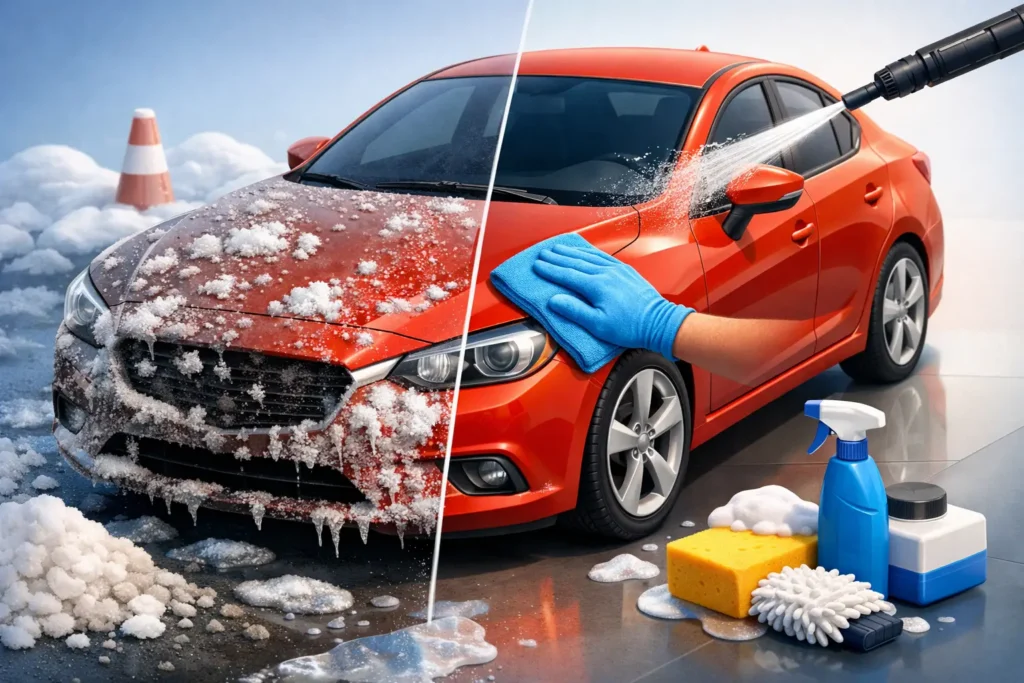
That chalky white film along your lower doors and behind the wheels is not just winter grime. If you are wondering how to remove road salt from car paint, the timing matters more than most drivers realize. In New England, salt does not wait for spring to start causing trouble. It works its way into seams, clings to clear coat, and accelerates wear on paint, trim, wheels, and undercarriage.
A quick rinse helps, but it is rarely enough once salt has dried onto the surface. The right approach is less about scrubbing harder and more about loosening contamination safely, washing in the correct order, and protecting the finish afterward. That is how you clean the vehicle without grinding salt back into the paint.
Why road salt is so hard on vehicle paint
Road salt is designed to lower the freezing point of water, which keeps roads safer but creates a messy, corrosive residue for vehicles. On paint, the problem is not always immediate peeling or visible failure. More often, it starts with dullness, stubborn film, and contamination that sits on the surface longer than it should.
The bigger issue is where salt travels. It collects around wheel arches, rocker panels, door jambs, emblems, panel gaps, and lower bumpers. If the paint already has chips or scratches, salt can make those weak points worse. On vehicles with premium finishes, darker paint colors, or soft clear coats, aggressive winter washing can create a second problem – marring and swirl marks.
That is why safe removal matters. You are not just cleaning for appearance. You are reducing exposure and protecting the finish for the long term.
How to remove road salt from car paint without scratching it
The safest method starts before you touch the paint with a mitt, brush, or towel. Salt particles and gritty winter debris act like abrasives. If you go straight into a hand wash on a dirty surface, you increase the odds of dragging that contamination across the clear coat.
Start with a thorough rinse, ideally using steady water pressure to flush off as much loose salt as possible. Pay extra attention to the lower half of the vehicle, wheel wells, around mud flaps, and the back of the car where slush tends to build up. Warm water can help dissolve residue faster, but it should never be hot enough to shock cold panels.
After the rinse, use a pH-balanced car shampoo or a quality pre-wash soap that is safe for exterior finishes. Let the soap dwell briefly so it can soften the salt film. This is one of the most overlooked steps. If you rush straight to agitation, you do more work and increase the risk of light scratching.
Then wash from the top down with a clean microfiber wash mitt, rinsing frequently. The roof, glass, and upper panels are usually less contaminated than the rocker panels and rear bumper. Saving the dirtiest areas for last keeps grime from spreading to cleaner sections of paint.
If salt has formed a stubborn crust, do not attack it with a stiff brush or excessive pressure. Re-rinse, re-foam, and allow more dwell time. In detailing, patience usually saves the finish.
The areas most drivers miss
Even careful car owners tend to focus on visible panels and miss the places where salt does the most damage. Door jambs, trunk seams, fuel filler areas, lower grille openings, and the lip behind the wheel arch can all hold residue long after the vehicle looks clean from ten feet away.
These areas need gentle but deliberate attention. A soft detailing brush, dedicated microfiber towels, and plenty of rinse water go a long way. If your vehicle has protective film, satin finishes, or aftermarket trim, product choice matters even more. What works on standard clear coat is not always the right fit for specialty surfaces.
Should you use a touchless wash, hand wash, or professional detail?
It depends on how much buildup you have, how often you wash, and what kind of protection is already on the vehicle.
A touchless wash is far better than letting salt sit for weeks, especially during active winter weather. It is convenient and helps reduce buildup between deeper cleanings. The trade-off is that it may leave behind a film, particularly on lower panels, and it rarely addresses jambs, wheels, or stubborn deposits thoroughly.
A careful hand wash gives you the best control and the best chance of fully removing road salt from car paint. It also gives you a chance to inspect for chips, staining, and any signs that your wax, sealant, or ceramic coating is weakening.
Professional detailing makes the most sense when the vehicle has heavy accumulation, neglected winter residue, or premium paint that you do not want to risk marring. It is also the better option if you want the undercarriage, wheels, paint, and protection layers handled properly in one visit. For many busy drivers, convenience is part of paint care. If the car never gets washed because life gets in the way, the best process is the one that actually happens.
What not to do when removing salt
The biggest mistake is washing with too little lubrication. Salt and grit need to be flushed away, not dragged across the finish. Dry wiping a salty panel, even with a decent towel, is a fast way to create fine scratches.
Another common mistake is using household cleaners. Degreasers, dish soap, or harsh all-purpose products can strip protection and dry out trim. They may make the surface look clean in the moment, but they often leave the paint less protected for the next storm.
It is also worth avoiding washes during the coldest part of the day if the vehicle will sit outside immediately after. Water trapped in seals or handles can freeze. In winter, process matters almost as much as products.
After washing, drying and protection matter too
Once the salt is gone, proper drying prevents water spotting and keeps leftover grime from settling back onto the paint. Use clean microfiber drying towels or a dedicated vehicle blower if you have one. Blow out mirrors, badges, door handles, and trim gaps where water tends to hide.
Protection is the next step that separates a clean car from a well-maintained one. A quality wax or paint sealant adds a sacrificial layer that makes future salt easier to remove. Ceramic-coated vehicles still need washing, but they usually release contamination more easily and stay cleaner longer between services.
If your vehicle sees daily winter driving in New Hampshire, Massachusetts, Maine, or Vermont, maintenance frequency matters. A protected vehicle that is washed regularly usually holds up better than one that gets a major cleanup only at the end of the season.
How often should you wash off road salt?
For most New England drivers, every one to two weeks is a smart target during active salting periods. If you drive long highway commutes, park outside, or travel during storms, weekly is even better. Waiting until the car looks extremely dirty is not the best indicator. Salt can be active long before it becomes obvious.
There are exceptions. If temperatures are staying below freezing for days and a full wash is not practical, a rinse-focused visit to remove buildup is still worthwhile. Then follow up with a more complete wash when conditions allow. Consistency beats perfection in winter care.
When salt damage needs more than a wash
Sometimes the paint is clean, but the finish still looks rough, dull, or stained. That can mean bonded contamination, etched residue, or existing paint defects that winter grime made more visible. In those cases, decontamination and paint correction may be needed before fresh protection is applied.
This is especially common on darker vehicles and daily drivers that have seen a few hard winters. If the goal is to preserve appearance, resale value, and long-term condition, winter washing should be part of a larger maintenance plan rather than a one-time fix.
For owners who want a higher level of care without the guesswork, a professional detail can restore the finish, inspect problem areas, and apply protection that better fits the season. SPS Autocare works with many drivers who want exactly that – not just a cleaner vehicle, but a smarter way to keep it protected through New England weather.
Road salt is part of winter driving, but paint damage does not have to be. The sooner you remove it, and the more carefully you do it, the easier it is to keep your vehicle looking the way it should all season long.