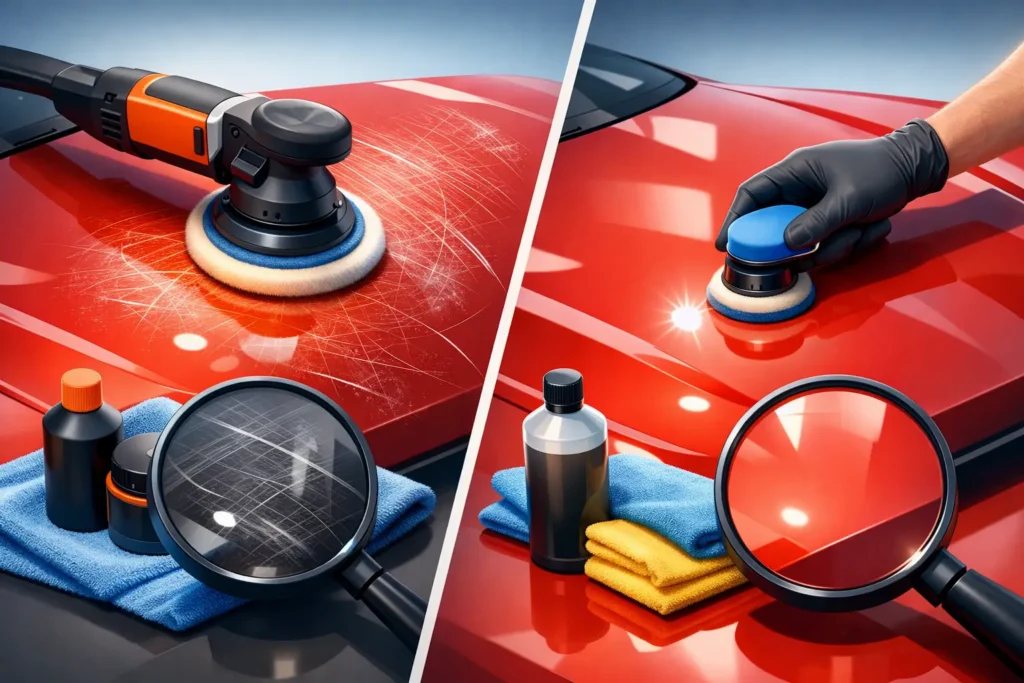
A lot of drivers ask for a “polish” when what they really want is defect removal. That is where the paint correction vs polishing conversation matters. If your vehicle has swirl marks, light scratches, haze, oxidation, or dull-looking paint, the right service depends on what you want fixed, how far the defects go, and what level of finish you expect.
The short version is this: polishing improves gloss and refines the paint, while paint correction is the more involved process of removing or significantly reducing visible defects. They are related, but they are not the same thing. If you are investing in your vehicle’s appearance, especially before ceramic coating or resale, knowing the difference helps you make a better decision.
Paint correction vs polishing: what is the difference?
Polishing is a broad term. In everyday conversation, people use it to describe anything that makes paint look better. In professional detailing, polishing usually means using a machine, pad, and polish to refine the paint surface, enhance clarity, and increase gloss. Depending on the polish and pad combination, it may also remove minor imperfections.
Paint correction is more specific. It refers to the process of leveling defects in the clear coat to reduce or eliminate swirl marks, micro-scratches, water spot etching, oxidation, and other paint imperfections. That process often includes polishing, but it goes further than a basic gloss enhancement.
Think of it this way: all paint correction includes polishing steps, but not all polishing qualifies as correction.
That distinction matters because expectations matter. If you are hoping a quick polish will remove years of automatic car wash damage, you will likely be disappointed. On the other hand, if your paint is already in good shape and you just want more depth and shine, a heavy correction service may be more than you need.
What polishing actually does
A professional polishing service is often the right choice for vehicles with light wash marring, reduced gloss, or paint that looks tired but not heavily damaged. The goal is to refine the finish, improve reflection, and bring back that clean, crisp look.
In many cases, polishing removes a small amount of clear coat to smooth the surface and minimize very light defects. It can make a huge visual difference, especially on dark colors, but it is usually not meant to chase every scratch. A one-step polish is common for daily drivers because it gives strong cosmetic improvement without the added time and cost of multi-stage correction.
For owners who want their vehicle to look noticeably better without aiming for near-perfect paint, polishing is often the sweet spot. It improves appearance, prepares the surface for protection, and fits well with maintenance-minded vehicle care.
What paint correction is designed to fix
Paint correction is the better fit when defects are the real problem. Swirl marks from tunnel washes, deeper scratches from poor wash techniques, hard water spotting, buffer trails, and oxidation usually need correction work if you want a meaningful change.
This is a more measured process. A detailer assesses the paint, checks defect severity, tests pad and compound combinations, and works in stages to improve the finish safely. Some vehicles need a single-stage correction. Others need a two-step or even more specialized approach to cut defects and then refine the paint back to clarity.
There is always a trade-off. More correction usually means more labor, more skill, and more clear coat removal. That is why professional correction should be deliberate, not aggressive for the sake of saying every mark is gone. The goal is improvement with judgment.
On a well-maintained vehicle, correction can create dramatic results. On older or heavily neglected paint, it can still transform the look, but perfection may not be realistic or responsible.
Why the confusion happens
Most customers are not expected to know paint terminology, and the industry does not always help. Some shops use “polishing” as a catch-all phrase because it sounds simple. Others advertise paint correction for services that are really just enhancement polishing.
That can lead to mismatched expectations on price, timing, and results. A basic polish and a true correction service can look very different on an estimate because they are very different in labor and technical approach. If a quote seems surprisingly low for correction, it is worth asking exactly what level of defect removal is included.
A trustworthy detailer explains what your paint condition supports, what percentage of improvement is realistic, and whether the service is meant to enhance gloss, remove defects, or both.
How to tell which service your car needs
Start with the paint in direct sunlight or under strong lighting. If you see light haze, faint swirls, and a general lack of gloss, polishing may be enough. If you see more obvious spiderwebbing, noticeable scratches, oxidation, or etched water spots, correction is probably the better route.
Your goals matter just as much as the paint condition. If you are preparing for a sale, a lease return, a special event, or simply want the car to feel fresh again, a polish may deliver the value you want. If you own a luxury vehicle, enthusiast car, or newer vehicle that you want to preserve at a higher standard, paint correction often makes more sense before applying long-term protection.
Budget and time also play a role. Polishing is generally faster and more affordable. Paint correction takes longer because test spots, multiple stages, and careful inspection are part of the job. Neither option is automatically better. The right service is the one that aligns with your paint, your expectations, and how long you plan to keep the vehicle.
Paint correction vs polishing before ceramic coating
This is one of the most important decision points. Ceramic coating adds protection and makes maintenance easier, but it does not hide defects. In fact, once the coating is applied, the paint’s condition becomes more obvious because the added gloss and reflection can highlight imperfections left behind.
That means the finish should be where you want it before the coating goes on. If the paint has visible swirls and you only choose a light polish, those swirls may still be there under the coating. If your goal is a cleaner, sharper finish that stays looking better longer, correction before coating is often the smarter investment.
For some drivers, a one-step polish before coating is completely appropriate. For others, especially on black paint or premium vehicles, more involved correction is worth it. This is one of those situations where “it depends” is the honest answer.
What results should you realistically expect?
A quality polish can make a vehicle look dramatically glossier and more cared for. It can reduce minor defects and improve overall color depth. That alone is enough to impress most owners.
Paint correction aims higher, but results still depend on paint thickness, defect depth, previous repairs, and the condition of the clear coat. Some scratches are too deep to remove safely. Some panels may have already been polished heavily in the past. A skilled professional knows when to improve and when to preserve.
The best result is not the most aggressive one. It is the best finish achieved safely.
That is especially important for New England drivers, where seasonal grime, road salt, improper winter washing, and hard environmental exposure can take a toll on paint over time. Restoring the finish is one part of the process. Protecting it afterward is what keeps the investment worthwhile.
Why professional technique matters
Machine polishing and paint correction are not just about products. They depend on paint evaluation, tool control, pad selection, lighting, and restraint. A poor process can leave haze, holograms, uneven results, or remove more clear coat than necessary.
That is why certification, experience, and process standards matter. At SPS Autocare, the difference is not just in making paint shine. It is in knowing how to approach each vehicle with the right level of correction, communicate clearly about expected results, and pair appearance improvement with long-term protection.
For customers who value convenience, this matters even more. You should not have to guess whether you are getting a gloss enhancement or true defect removal. The service should be explained in plain terms, performed with care, and matched to how you use your vehicle.
If you are deciding between polishing and paint correction, the best next step is not choosing a term. It is choosing the result you want, then having the paint evaluated honestly. The right service should leave you feeling confident every time the light hits the finish.