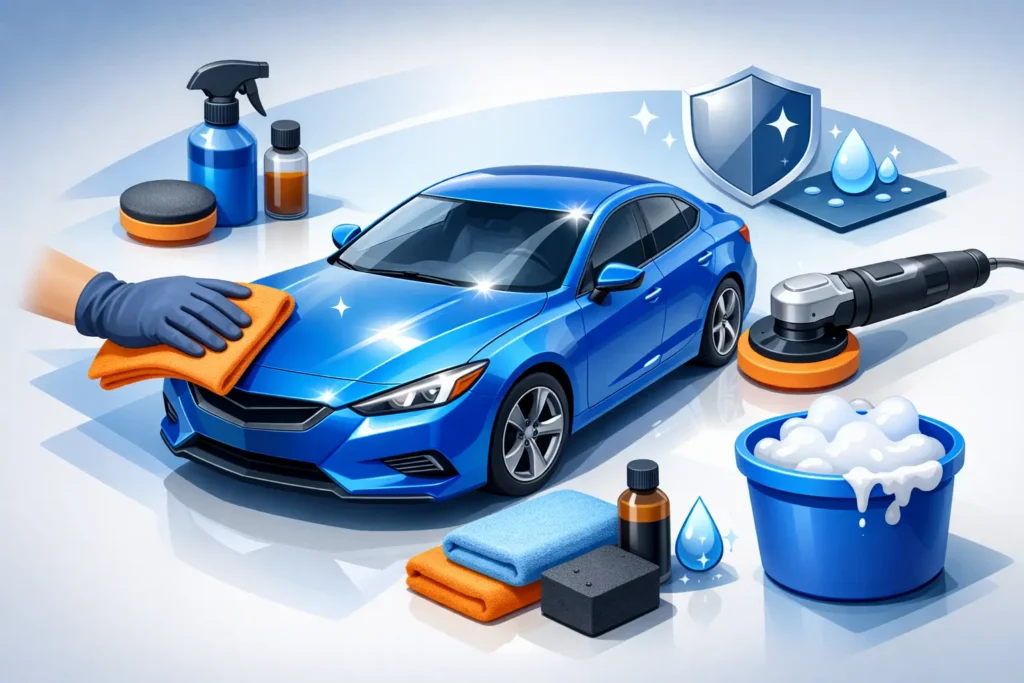
The first time a coated vehicle sheets water properly after a wash, most owners get it – ceramic coating makes maintenance easier, but it does not make maintenance optional. If you want to know how to maintain ceramic coating the right way, the goal is simple: protect the coating from avoidable wear so it keeps doing its job longer.
That matters even more in New England. Road salt, sand, spring pollen, bug residue, tree sap, and winter grime all put steady pressure on your vehicle’s finish. A quality coating helps, but the way you wash, dry, and handle contamination has a direct impact on how the surface looks and performs over time.
What ceramic coating maintenance really means
Ceramic coating maintenance is not about constantly adding products or chasing a perfect social media shine. In practice, it means keeping the surface clean, removing contamination before it bonds, and avoiding habits that slowly degrade the coating.
A properly installed coating creates a harder, more chemically resistant layer than bare paint or traditional wax. It improves gloss, helps water and grime release more easily, and reduces how much dirt sticks to the surface. But it still takes abuse from automatic car washes, harsh brushes, mineral-heavy water, neglected bird droppings, and poor wash techniques.
That is where many owners get tripped up. They assume the coating failed, when the real issue is often clogged performance. A coated surface can lose slickness and water behavior simply because it is loaded with road film, minerals, and bonded contamination. The coating may still be there – it just needs proper care.
How to maintain ceramic coating without wearing it down
The best maintenance routine is consistent, gentle, and realistic for your schedule. For most daily driven vehicles, washing every two to four weeks is a strong baseline. If your car sees salted roads, heavy highway driving, pollen, or frequent parking under trees, you may need to clean it more often.
Hand washing is still the preferred method. Use a pH-balanced soap designed for coated vehicles or at least one that does not leave heavy gloss enhancers, waxes, or residue behind. You want the surface clean, not masked.
Start with a thorough rinse to knock off loose grit. If the vehicle is especially dirty, a pre-wash foam or touchless pre-rinse helps reduce the amount of friction needed later. That matters because friction is what causes wash marring, even on protected paint.
Use clean microfiber wash media and the two-bucket method, or a similarly safe process that keeps dirt away from the paint. Work from the cleaner upper panels down toward the dirtier lower sections. Wheels, rocker panels, and rear bumpers typically hold the heaviest contamination and should be handled separately.
Drying matters as much as washing. Letting water air dry can leave mineral deposits that interfere with gloss and hydrophobic behavior. A dedicated drying towel, quality blower, or a combination of both is usually the safest approach. If your local water is hard, drying quickly becomes even more important.
The biggest mistakes coated car owners make
Most ceramic coating problems are maintenance problems in disguise. The biggest one is relying on tunnel washes with brushes. Even if the coating adds some resistance, repeated mechanical contact still creates swirls and dulls the finish.
Another common mistake is using strong degreasers or aggressive all-purpose cleaners too often. There are times when stronger chemistry is appropriate, especially for lower panels or heavy winter buildup, but routine overuse can reduce the coating’s performance and dry out exterior trim.
Spray waxes and bargain “ceramic” products can also create confusion. Some are fine as maintenance aids, but others leave residue that temporarily changes how the surface behaves. Owners sometimes think they are restoring the coating when they are really just covering contamination or adding a short-lived topper.
The last big issue is delay. Bird droppings, bug remains, tree sap, and water spots should not sit on a coated vehicle for long. Ceramic coating improves resistance, but it is not a force field. Given enough heat and time, contamination can still stain or etch.
When decontamination is necessary
Even with careful washing, coated vehicles gradually collect bonded contamination. That can include iron fallout, mineral buildup, road film, and environmental debris that regular soap will not fully remove. When that layer builds up, water may stop beading cleanly, the paint can feel rough, and the vehicle may look flatter than expected.
This is where maintenance becomes more than a basic wash. Periodic chemical decontamination can restore performance, but it should be done thoughtfully. Iron removers, water spot removers, and coating-safe decon products all have their place, but the right choice depends on what is actually on the surface.
It is not always smart to reach for the strongest product first. If the issue is mineral spotting from hard water, an iron remover will not fix it. If the issue is winter road film, a mild acid soap or dedicated decontamination wash may be the better approach. This is one reason professional maintenance can make a real difference – proper diagnosis prevents unnecessary abrasion and chemical stress.
How to maintain ceramic coating through New England seasons
Seasonal care matters in this region because the contaminants change fast.
In winter, salt and sand are the main problem. Frequent rinse-downs help, even if you cannot complete a full hand wash every time. Leaving salt on lower panels for weeks is hard on every exterior surface, coated or not. If you use a self-serve wash, choose touchless options and avoid stiff communal brushes.
In spring, pollen and rainwater can create a stubborn film that hides gloss. More frequent washing usually solves that. During summer, bug splatter, bird droppings, and sun-baked contamination need faster attention because heat accelerates staining. In fall, tree sap and organic debris become more common, especially for vehicles parked outside.
A maintenance routine should adapt to the season, not stay fixed year-round. That is one reason many owners benefit from a professional upkeep schedule rather than guessing when the coating needs attention.
Products and add-ons: helpful, but not always necessary
There is a difference between maintaining a coating and constantly layering products onto it. A good coating-safe shampoo, proper microfiber towels, and occasional decontamination are usually the foundation. Beyond that, maintenance sprays can be useful if they are compatible with the coating and used sparingly.
Some toppers improve slickness and water behavior after a wash, which can be helpful between larger maintenance services. But they should support the coating, not become a crutch for poor washing habits. If the finish looks dull or beads poorly every week, the answer is not always another spray product. Often, the surface needs to be properly cleaned and reset.
If you are unsure what was installed on your vehicle, that matters too. Different coatings have different maintenance recommendations. A professional-grade coating may tolerate and respond differently than a consumer-applied product. The safest path is to follow the installer’s care guidance instead of mixing random products from store shelves.
When professional maintenance is worth it
For busy owners, ceramic coating maintenance often comes down to time. You may know how to wash the vehicle properly and still not have the schedule, setup, or weather conditions to do it consistently. That is where a professional maintenance service becomes practical, not indulgent.
A trained detailer can inspect the coating, identify whether performance loss is caused by contamination or actual wear, and use the right process to restore the finish safely. That might include a decontamination wash, mineral removal, drying with filtered tools and towels, and the appropriate maintenance product if needed.
For premium vehicles, dark paint, and daily drivers exposed to harsh seasonal conditions, this kind of upkeep protects more than appearance. It helps preserve the coating investment, supports resale value, and prevents small issues from becoming correction work later. At SPS Autocare, this long-term approach is a big part of how we help clients keep their vehicles looking consistently high-end without adding hassle to their week.
How to tell your ceramic coating needs attention
You do not need to wait for the vehicle to look bad. Usually, the first signs are subtler. Water stops behaving evenly across the panels. The paint feels less slick after washing. Drying becomes harder. Gloss seems muted even though the car is technically clean.
Those are signs to inspect the surface, not panic. In many cases, the coating has not failed. It just needs a proper maintenance wash or decontamination service to clear what is sitting on top of it.
The best ceramic coatings reward consistency. Wash gently, remove contaminants early, and do not confuse convenience with good care. A coated vehicle should be easier to maintain, and when it is maintained correctly, that easier ownership experience is exactly what makes the investment worthwhile.