
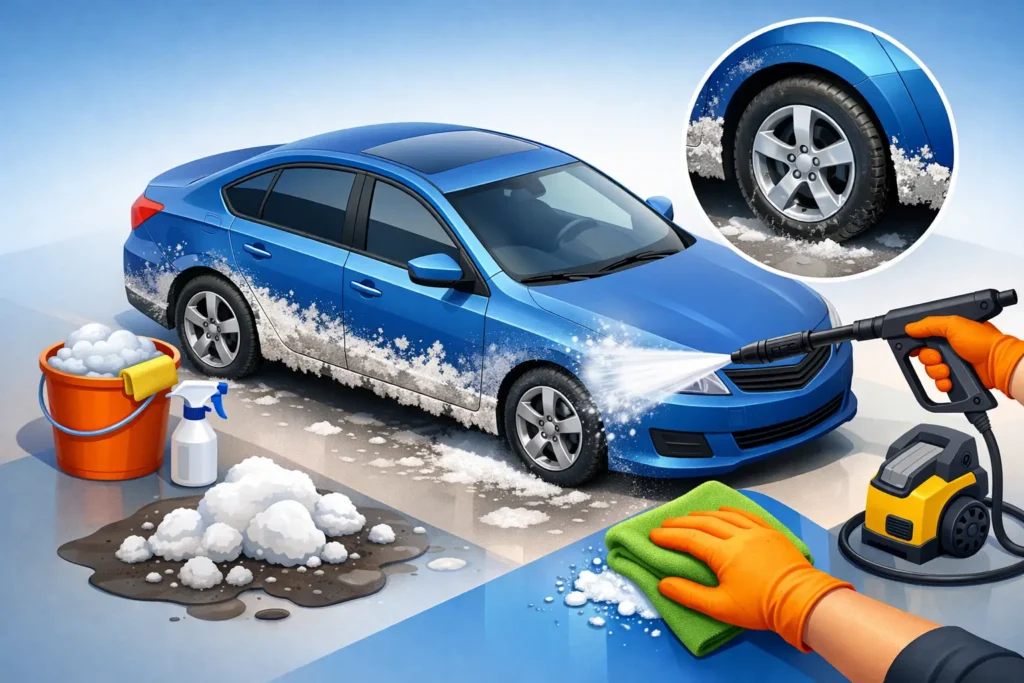
Winter roads in New England are hard on vehicles, but the real problem often shows up after the drive. That white film on paint, crunchy buildup on carpets, and chalky residue around door jambs are all signs you need to know how to remove salt residue before it starts causing lasting damage.
Salt is not just a cosmetic issue. Road salt and de-icing chemicals cling to paint, wheels, undercarriages, rubber seals, and interior carpet fibers. Left alone, they can dry out surfaces, stain fabrics, dull finishes, and speed up corrosion. If you want your vehicle to stay clean, protected, and easier to maintain through the season, proper removal matters.
Why salt residue is harder on cars than most drivers realize
A quick rinse helps, but salt has a way of settling into seams, textured plastics, carpet backing, and the lower sections of the vehicle where moisture lingers. In New Hampshire, Massachusetts, Maine, and Vermont, winter conditions create the perfect cycle for buildup – wet roads, freezing temperatures, repeated treatment, and long stretches between thorough washes.
That means salt often sticks around longer than drivers think. You may wash the exterior and still have residue trapped behind wheel spokes, inside fender liners, along rocker panels, or in the carpet under your floor mats. This is where damage starts to become more than surface-level.
The goal is not just to make the car look cleaner. It is to remove contamination fully enough that it stops working against your paint, trim, and interior materials.
How to remove salt residue from exterior surfaces
When dealing with paint and trim, the safest approach is to loosen the salt first, then wash it away without grinding it into the surface. If the residue is heavy, start with a thorough pre-rinse using plenty of water, focusing on the lower panels, wheel wells, bumpers, and around the rear hatch or trunk area. Those are common collection points.
After the rinse, use a pH-balanced car shampoo with warm water if possible. Warm water helps break down residue more effectively than cold water, especially in winter conditions, but it should never be hot enough to create a shock on cold panels. Wash from the top down, saving the dirtiest lower sections for last. This reduces the chance of dragging abrasive salt particles across cleaner paint.
A dedicated wash mitt for lower panels is a smart move. The upper half of the vehicle usually carries normal dirt. The lower half often carries road film, sand, brine, and salt crystals. Keeping those areas separate helps reduce wash-induced marring.
If residue remains after a normal wash, especially as a chalky film on dark paint or trim, a second pass may be necessary. In some cases, mineral and salt deposits need more than soap alone. A professional-grade decontamination wash or a surface-safe cleaner designed for mineral buildup may be appropriate, but the product has to match the surface. Painted panels, matte trim, polished wheels, and protective coatings do not all respond the same way.
Don’t forget the undercarriage and wheel wells
If there is one area drivers underestimate, it is the underside of the vehicle. Knowing how to remove salt residue from visible paint is useful, but the undercarriage is where salt quietly does the most harm.
A targeted underbody rinse is essential during winter and early spring. Focus on suspension components, frame areas, wheel wells, and the inner edges of rocker panels. Automatic car washes with undercarriage spray can help with maintenance between details, but they vary in effectiveness. A touchless option is generally safer than a tunnel wash with brushes, especially for vehicles with delicate finishes or existing protection.
Wheels need special attention too. Brake dust and salt together create stubborn buildup that bonds to wheel faces and barrels. Use a wheel-safe cleaner and proper brushes to get into the inner barrel, lug recesses, and around calipers. If wheels are neglected for too long, the finish can become permanently etched or stained.
How to remove salt residue from carpet and floor mats
Interior salt stains are one of the most common winter complaints, especially for families, commuters, and anyone in and out of the car all day. The residue usually shows up as white crusty marks on carpet and mats after melted snow dries.
To remove it properly, start by vacuuming the area once it is dry. This lifts loose salt and grit before moisture is introduced. If you skip this step, you turn dry contamination into muddy residue that spreads deeper into the fibers.
Once vacuumed, lightly treat the area with a solution that helps break down the alkaline salt deposits. A common approach is a diluted mix of white vinegar and water, followed by gentle agitation with a soft interior brush. The vinegar helps dissolve the residue, but it should be used carefully and not oversaturated into the carpet. Too much liquid can soak into the padding, create odor issues, and make drying take much longer.
After agitation, blot or extract the moisture and repeat as needed. Stubborn stains often take more than one pass, especially if the salt has been ground in for weeks. Rubber mats are simpler – remove them, rinse thoroughly, clean the grooves, and let them dry fully before putting them back.
For carpeted mats and vehicle carpeting, full extraction usually gives the best result. It removes not just the visible stain, but also the residue trapped below the surface. That matters because leftover salt can wick back up as the carpet dries, making it look like the stain came back when it never really left.
Door jambs, seals, and trim need a different approach
Salt tends to collect in the places drivers rarely clean often enough. Door jambs, trunk channels, gas cap areas, step plates, and weather seals all catch slush and brine. These areas are easy to miss during a standard wash, but they are also where residue can sit for long periods.
Use a gentle all-purpose cleaner or dedicated detailing cleaner with soft brushes and microfiber towels for these sections. The key is control. You want enough cleaning power to break down the grime without drying out rubber seals or staining trim. Once cleaned, rubber seals benefit from a proper conditioner to help keep them pliable through cold weather.
This is also where a professional detail stands out. Tight seams, badges, textured plastics, and intricate trim require patience, proper tools, and a methodical process. Rushing these areas usually means the visible residue is gone while hidden contamination remains.
When DIY works and when professional help makes sense
If the buildup is light and you stay ahead of it, a careful home wash can absolutely help. The same goes for minor interior staining caught early. But there is a difference between maintenance cleaning and restoration.
If your carpet has recurring white staining, your wheels have baked-on residue, or the lower body still feels rough after washing, it may be time for a more thorough decontamination. Vehicles with ceramic coatings, paint protection film, or specialty finishes also deserve a process that protects those investments instead of working against them.
Professional detailing is especially worthwhile after a long winter, before applying any protective treatment, or when resale value matters. A properly cleaned and decontaminated vehicle is easier to protect, easier to maintain, and simply looks better in every light.
The best way to keep salt residue from coming back
The most effective strategy is frequency. Salt is easier to remove when it is fresh. Waiting until the car looks visibly dirty usually means the residue has already had time to settle into problem areas.
Regular rinses through winter, periodic undercarriage cleaning, and quick attention to interior mats make a major difference. Protective products help too. Sealants, ceramic coatings, interior protectants, and well-fitted all-weather mats do not stop exposure, but they reduce how aggressively salt bonds to the surface.
That is why many drivers benefit from a maintenance plan rather than occasional deep cleaning. Consistent care keeps the vehicle in a better condition year-round and lowers the effort required each time. For busy owners who want premium results without losing weekends to winter cleanup, that convenience matters as much as the finish.
At SPS Autocare, we see firsthand how quickly New England salt buildup can age a vehicle when it is ignored. The good news is that the right process works. If you stay proactive, use surface-safe methods, and treat salt as a contaminant instead of a simple mess, your car has a much better chance of coming out of winter looking like it was cared for every step of the way.
A clean vehicle always looks good, but a properly de-salted one lasts longer, feels better to drive, and is far easier to protect for the road ahead.