The first rock chip usually happens fast. One highway commute, one gravel truck, one winter road treatment, and the front of a well-kept vehicle starts showing it. That is why this guide to paint protection film matters for New England drivers who want their vehicles to stay cleaner, glossier, and better protected for the long haul.
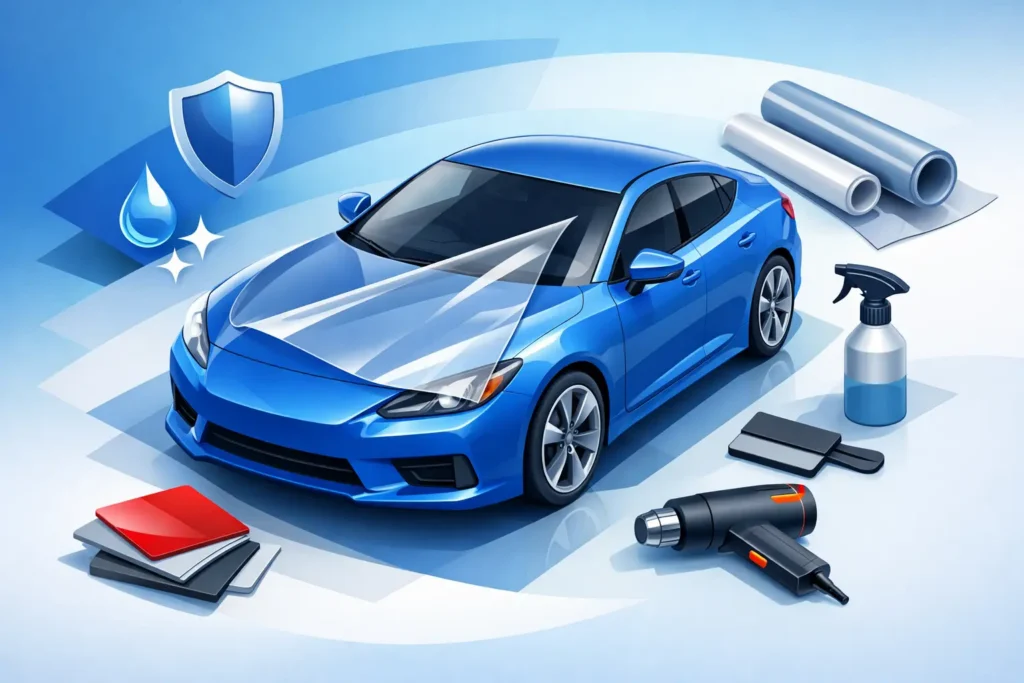
Paint protection film, often called PPF or clear bra, is a transparent urethane film installed over painted surfaces to help defend against chips, scratches, bug acids, road debris, and everyday wear. It is not wax, and it is not the same thing as ceramic coating. It is a physical barrier, which makes it one of the most effective options for preserving factory paint on both luxury vehicles and daily drivers.
What paint protection film actually does
PPF is designed to absorb the kind of minor impact and abrasion that would otherwise mark the paint underneath. Think of the areas that take the most abuse: the front bumper, hood, fenders, mirrors, rocker panels, door edges, and rear bumper ledge. Those are the places where you most often see pitting, scuffs, and premature wear.
A high-quality film also brings self-healing properties to the table. In practical terms, that means light surface marring can relax out with heat from the sun or warm water. It does not make the vehicle indestructible, and it will not erase deep cuts, but it does help the finish look better between washes and over time.
For many owners, the value is not just cosmetic. Preserving original paint can support resale value, especially on higher-end vehicles, leased vehicles, and cars that are washed often or driven year-round.
Guide to paint protection film: where it makes the biggest difference
Not every vehicle needs full-body coverage. The right approach depends on the car, how you drive, where you park, and how long you plan to keep it.
For a commuter vehicle that sees highway miles, a partial front or full front package often makes the most sense. That usually focuses on the highest-impact zones and gives strong protection where damage is most likely. For luxury, exotic, or newly purchased vehicles, full-body PPF can be the better fit because it protects nearly every painted panel and helps maintain a more uniform finish.
There is also a practical middle ground. Some owners choose front-end coverage plus rocker panels, A-pillars, door cups, and luggage-strip protection. That setup addresses common wear points without committing to a full wrap.
The key is matching coverage to real use, not just the ideal scenario. A garage-kept weekend car has different needs than a black SUV driven through New Hampshire winters.
PPF vs ceramic coating
This is where confusion comes up most often. Ceramic coating and paint protection film are both protective services, but they solve different problems.
PPF is best for impact protection. It helps guard against rock chips, road rash, and minor physical damage. Ceramic coating is best for easier maintenance. It adds slickness, gloss, and chemical resistance, which helps with washing and reduces how strongly dirt sticks to the surface.
If you are choosing between the two, ask what concerns you more. If the answer is chips and physical wear, start with PPF. If the answer is frequent washing and keeping the vehicle glossy with less effort, ceramic coating may be enough. Many vehicle owners combine both, with film installed first and ceramic coating applied over the film and remaining painted surfaces.
That combination is popular for a reason. It gives the vehicle a physical barrier in vulnerable areas and makes routine care easier across the whole exterior.
What to expect during installation
A professional PPF installation starts long before the film touches the paint. The vehicle should be thoroughly washed, decontaminated, and inspected. In many cases, at least some paint correction is recommended first, because film can lock in what is already there. If swirl marks, haze, or staining are left in the paint, they do not disappear under the film.
Once prep is complete, the installer applies precisely cut film or custom-fits bulk material to each panel. Proper alignment, edge wrapping, and surface preparation matter a lot here. A rushed installation can lead to visible lines, lifting edges, trapped debris, or poor overall appearance.
Some moisture and slight texture are normal immediately after installation. As the film cures, that typically settles. Good installers will explain what is normal, what to avoid during curing, and how soon the vehicle can be washed.
How long paint protection film lasts
Most modern premium films are built to last for years, not months. Actual lifespan depends on film quality, installation quality, sun exposure, washing habits, and how the vehicle is used. A car parked outside year-round in harsh conditions will age film differently than a garage-kept vehicle that is hand-washed and maintained.
In general, high-end PPF can offer multi-year durability with proper care. That said, longevity is not just about the film itself. It is also about whether the edges were installed cleanly, whether contamination was removed properly before application, and whether the owner follows reasonable aftercare.
Film is a sacrificial layer. That is the point. Over time, it may show the wear that would otherwise have affected the paint.
The real trade-offs to know before you buy
A good guide to paint protection film should be honest about trade-offs. PPF is one of the best paint preservation tools available, but it is not the right answer for every owner.
The biggest consideration is cost. Quality film and skilled installation are premium services because they require material quality, controlled prep, and attention to detail. Cheap PPF work often becomes expensive later when edges fail, clarity drops, or removal is difficult.
There is also a visibility trade-off, even with excellent film. Modern films are impressively clear, but on some colors and under certain lighting, edges may still be faintly detectable, especially if only select panels are covered. That is normal. The goal is discreet protection, not invisibility under every condition.
Finally, PPF reduces damage risk. It does not eliminate it. A hard enough impact can still go through the film, and neglect can still shorten the life of the installation.
Who should seriously consider PPF
If you just purchased a new vehicle and want to preserve the finish from day one, PPF is worth a close look. The same goes for owners of dark-colored vehicles, performance cars, trucks and SUVs with wide front ends, and anyone driving frequent highway miles.
It also makes sense for families and busy professionals who plan to keep a vehicle for years and want it to hold up well without constant cosmetic touch-up work. In regions like NH, MA, ME, and VT, where roads can be tough on paint, that extra layer of protection often pays off in avoided wear alone.
Leased vehicles can benefit too, especially when appearance standards matter at turn-in. And for collectors or enthusiasts, film helps preserve originality in a way repainting never fully replicates.
How to maintain PPF without shortening its life
Caring for film is straightforward, but technique matters. Wash the vehicle regularly using safe methods and a pH-balanced soap. Letting bug residue, bird droppings, and winter grime sit on the surface too long is not ideal, even on protected panels.
Avoid harsh scrubbing, low-quality automatic washes with aggressive brushes, and strong chemicals that are not approved for film. If the vehicle has both PPF and ceramic coating, maintenance usually becomes easier, but it still needs proper washing.
Periodic inspections are useful, especially around edges and high-contact areas. If something looks off, dealing with it early is better than waiting for contamination or lifting to worsen.
Choosing the right installer matters as much as choosing the film
Two shops can use similar film and deliver very different results. That is why experience, certification, prep standards, and communication matter so much.
A professional installer should be able to explain coverage options clearly, set expectations about appearance and cure time, and recommend a package based on how you actually use your vehicle. They should also be transparent about limitations, not just benefits. Shops that take surface prep seriously and treat PPF as a precision service, not a volume add-on, tend to deliver the strongest long-term outcomes.
For vehicle owners who care about craftsmanship and convenience, this part matters more than any marketing claim on a film box.
The best protection plan is the one that fits your car, your roads, and your standards. If you want your vehicle to keep looking like it belongs in your driveway instead of a body shop estimate, paint protection film is one of the smartest places to start.