
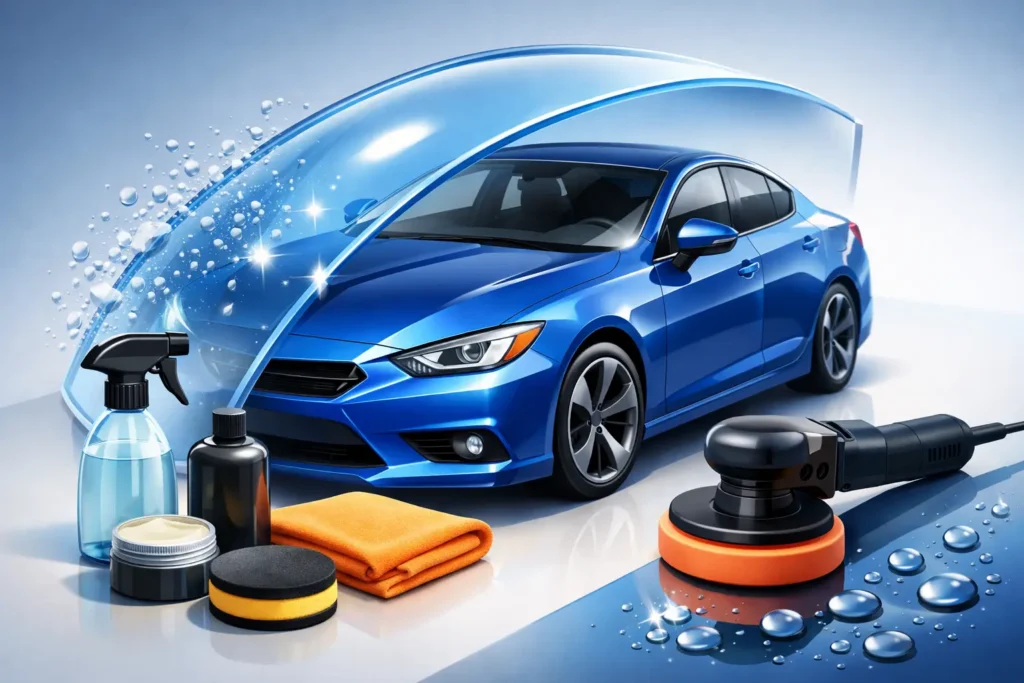
A black SUV looks incredible for about ten minutes after a quick wash – until the sunlight hits it and every swirl mark, water spot, and scratch shows up at once. In New England, that problem gets worse fast. If you are wondering how to protect car paint, the answer is not one product or one wash. It is a system that shields the finish from road salt, UV exposure, tree sap, bird droppings, improper washing, and daily wear before the damage becomes expensive to correct.
For most drivers, paint protection comes down to two goals: keeping the vehicle looking sharp and preserving long-term value. Whether you drive a family SUV, a daily commuter, or a high-end weekend car, the paint is one of the first things people notice and one of the costliest areas to restore once neglect sets in.
Why car paint breaks down faster than people expect
Modern automotive paint is durable, but it is not invincible. The clear coat is designed to take the abuse, yet it gradually thins and degrades when it is exposed to contamination and friction over time. In this region, winter road salt, sand, and freeze-thaw cycles are hard on exterior surfaces. Summer brings UV damage, bug splatter, and baked-on contaminants. Even something as simple as wiping dust off a dry panel can leave fine scratches.
A lot of paint damage also comes from good intentions. Automatic car washes with harsh brushes, household cleaners, dirty wash mitts, and improper drying methods can all create swirl marks and marring. By the time a vehicle starts looking dull, the issue usually has been building for months or years.
How to protect car paint with the right wash routine
The most effective protection starts with washing the car correctly. That may sound basic, but the wash process is where many vehicles pick up the majority of their visible defects.
A proper wash removes abrasive dirt before it gets dragged across the surface. That means using pH-balanced car shampoo, clean wash media, and a method that separates rinse water from soapy water. It also means drying with quality microfiber towels or forced air instead of letting minerals in the water dry on the surface.
Frequency matters too. Leaving contaminants on paint for too long gives them time to bond, stain, or etch. Bird droppings and bug remains are especially aggressive. During winter, salt film should not sit on the vehicle for weeks at a time. During pollen season and summer storms, regular maintenance helps keep buildup from becoming a correction issue later.
If your schedule is packed, this is where professional maintenance detailing makes practical sense. A consistent service schedule usually costs less than heavy paint correction after neglect.
The trade-off with frequent washing
Washing more often helps, but only if it is done correctly. Poor washing done every week can create more damage than careful washing done less often. The goal is not just a clean car. It is a clean car without adding scratches.
Protection products are not all equal
Many owners assume wax, sealant, ceramic coating, and paint protection film all do the same job. They do not. Each protects paint differently, and the best option depends on your vehicle, budget, and expectations.
Wax is the traditional choice. It can improve gloss and provide short-term protection, but it does not last very long, especially through a New England winter. A synthetic sealant typically lasts longer and offers better chemical resistance, making it a stronger option for daily drivers.
Ceramic coating is a more advanced form of protection. It creates a durable, chemically resistant layer that helps reduce contamination bonding and makes maintenance easier. Coated vehicles are generally easier to wash, hold gloss longer, and resist environmental damage better than unprotected paint. That said, ceramic coating is not scratch-proof and it is not a substitute for proper washing.
Paint protection film, often called PPF, serves a different purpose. It is designed to absorb physical impact from rock chips, road debris, and minor abrasion. If you drive a lot of highway miles, own a luxury vehicle, or want to preserve high-impact areas like the front bumper and hood, PPF is often the best defense against actual impact damage.
Choosing the right level of protection
For some owners, a sealant is enough. For others, ceramic coating delivers the right balance of durability, gloss, and easier upkeep. For the highest-risk areas, PPF offers protection that coatings simply cannot. The right answer depends on how you use the vehicle and how long you plan to keep it.
The surface has to be prepared first
One of the biggest mistakes in paint protection is applying a premium product over neglected paint. If the surface has bonded contaminants, oxidation, water spots, or swirl marks, those defects do not disappear under a coating or sealant. They get locked in.
Proper prep usually includes a deep exterior wash, chemical decontamination, clay treatment if needed, and paint correction when the finish has visible defects. This is where professional detailing separates itself from quick-service work. Real protection is only as good as the condition of the paint underneath it.
For newer vehicles, prep may be minimal. For daily drivers that have seen a few winters, correction can make a dramatic difference before any protective layer is installed. It is also the point where experience matters. Over-polishing removes clear coat unnecessarily, while under-prepping leaves the finish less than it could be.
Environmental threats that need quick action
If you want to know how to protect car paint over the long term, speed matters when contamination hits the surface. Some problems are not serious if removed quickly, but become permanent if ignored.
Bird droppings, bug splatter, tree sap, hard water spots, and road salt are the biggest offenders. They are not just ugly. They can stain or etch clear coat. Parking habits help more than people realize. Shade can reduce UV exposure, but parking under certain trees can mean sap and bird mess. Garaging a vehicle helps, but a garage is not a cure-all if the paint is already dirty and contaminated.
A good rule is simple: if something lands on the paint and you can see it, remove it as soon as practical using the right products and techniques. Waiting for the next full wash is not always the best move.
How to protect car paint through every season
Seasonal changes matter in New England because the threats change throughout the year. Winter protection should focus on resisting salt, slush, and repeated wash cycles. Fall is a smart time to refresh protection before temperatures drop. Spring is ideal for decontamination after months of road grime. Summer calls for attention to UV exposure, bug residue, and water spotting.
This is why many owners benefit from a maintenance plan rather than one annual detail. Protection performs better when it is inspected, refreshed, and supported by regular care. A coated vehicle still needs washing. A protected vehicle still needs contamination removed. Paint protection works best as an ongoing strategy, not a one-time event.
When professional protection is worth it
There is a DIY path for basic paint care, and for some owners that is enough. But when the goal is premium appearance, maximum longevity, and reduced risk of mistakes, professional service usually delivers more reliable results.
That is especially true for paint correction, ceramic coating installation, and PPF. These services require controlled prep, product knowledge, and trained technique. A certified detailing provider should be able to explain the process clearly, set realistic expectations, and recommend the right solution based on how you actually use your vehicle.
At SPS Autocare, that customer-first approach matters because not every vehicle needs the same level of correction or protection. A daily-driven family vehicle has different needs than a garage-kept performance car. The right recommendation should reflect that.
Protecting paint is really about reducing avoidable damage
The best-looking vehicles are not always the ones that get the most attention. They are the ones that get the right attention at the right time. Wash carefully. Remove contaminants quickly. Use the right protection for your driving habits. Refresh that protection before the seasons work against you.
Paint does not usually fail all at once. It fades, swirls, stains, and chips little by little. Taking care of it early is easier, less expensive, and far more effective than trying to reverse years of damage later. If you want your vehicle to keep looking like something you are proud to drive, start protecting the finish before it starts asking for rescue.